
DNS Monitoring for MSPs: The Complete Guide to Managing Client Domains at Scale (2026)
Managing DNS across multiple client domains is one of the most critical - and most underestimated - responsibilities for Managed Service Providers (MSPs).
Everything works… until it doesn’t.
A single unnoticed DNS change, expired domain, or SSL failure can instantly lead to:
- website downtime
- email outages
- security risks
- and frustrated clients
And the worst part? Clients expect you to catch it - even if you weren’t the one who caused it.
This guide explains how modern MSPs approach DNS monitoring, why manual tracking fails, and how to build a system that detects issues before clients even notice them.
What Is DNS Monitoring?
DNS monitoring is the process of continuously tracking domain infrastructure to ensure everything works as expected.
For MSPs, this includes:
- Monitoring DNS records (MX, NS, A, CNAME)
- Detecting DNS changes in real-time
- Tracking domain expiration dates
- Monitoring SSL certificates
- Receiving alerts when something goes wrong
Unlike basic uptime monitoring, DNS monitoring focuses on the infrastructure layer behind websites and email systems.
Why DNS Monitoring Is Critical for MSPs
Most DNS-related incidents are not complex - they’re simply unnoticed.
1. DNS Issues Are Silent
DNS problems don’t break loudly. They:
- happen in the background
- don’t trigger basic alerts
- often go unnoticed for hours
until a client reports it first.
2. Clients Always Blame the MSP
Even if:
- the domain is managed elsewhere
- DNS was changed by a third party
- the registrar had an issue
you are still responsible in the client’s eyes
3. Small Mistakes Have Big Impact
A single DNS change can:
- break email (MX records)
- redirect traffic
- expose users to phishing
- take a website offline
4. Manual Tracking Doesn’t Scale
Many MSPs still rely on:
- spreadsheets
- calendar reminders
- manual registrar checks
This works… until you manage:
- 20 domains → manageable
- 50 domains → risky
- 100+ domains → guaranteed failures
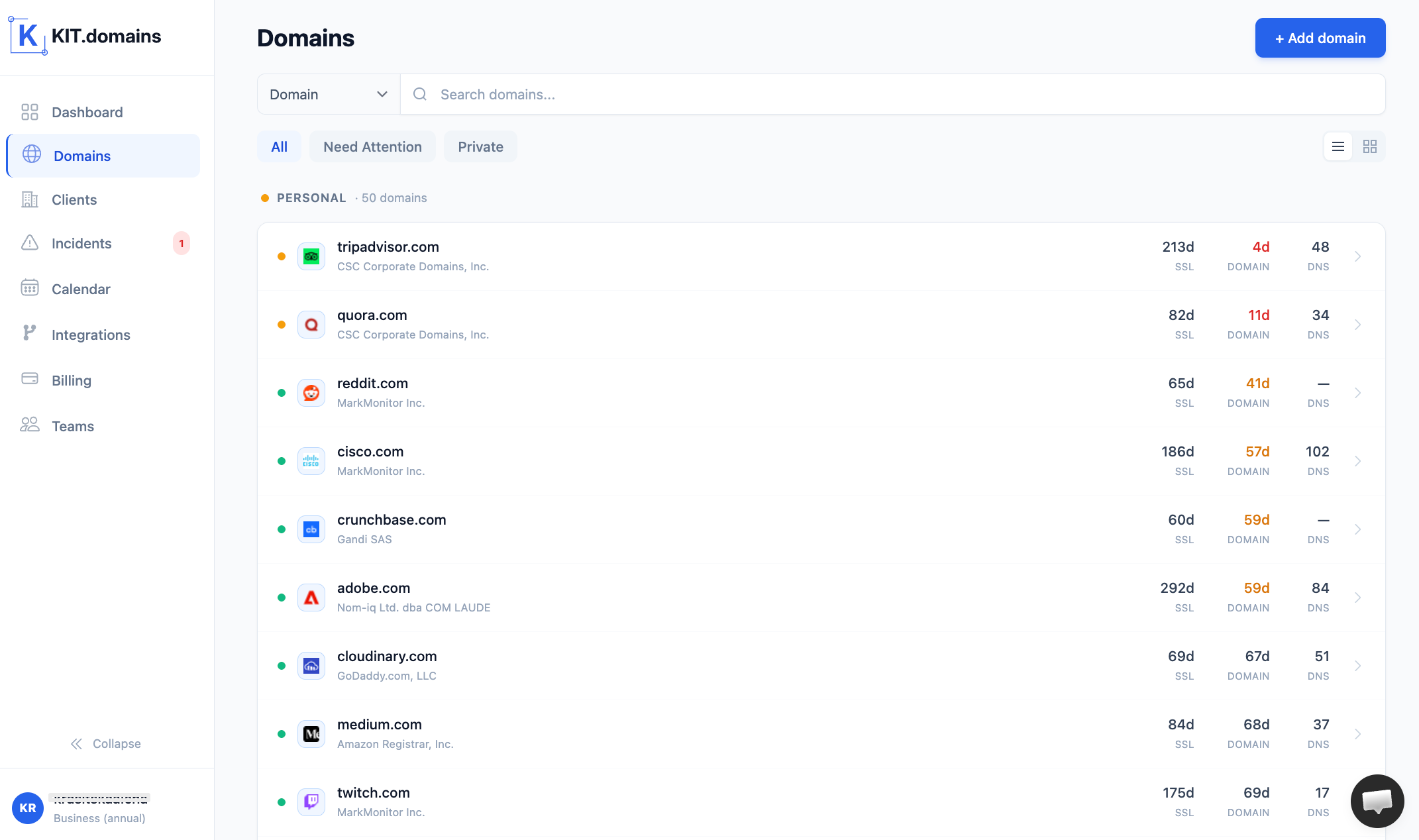
This is why many teams move from DNS monitoring to full domain monitoring platforms like KIT.domains replace manual workflows with real-time monitoring and alerts.
What Should MSPs Monitor?
To prevent incidents, MSPs must monitor 4 critical layers:
1. DNS Records (MX, NS, A, CNAME)
MX Records (Email). If MX records change:
- emails stop working instantly
- clients lose communication
NS Records (Name Servers). If NS records change:
- domain control is affected
- risk of DNS hijacking increases
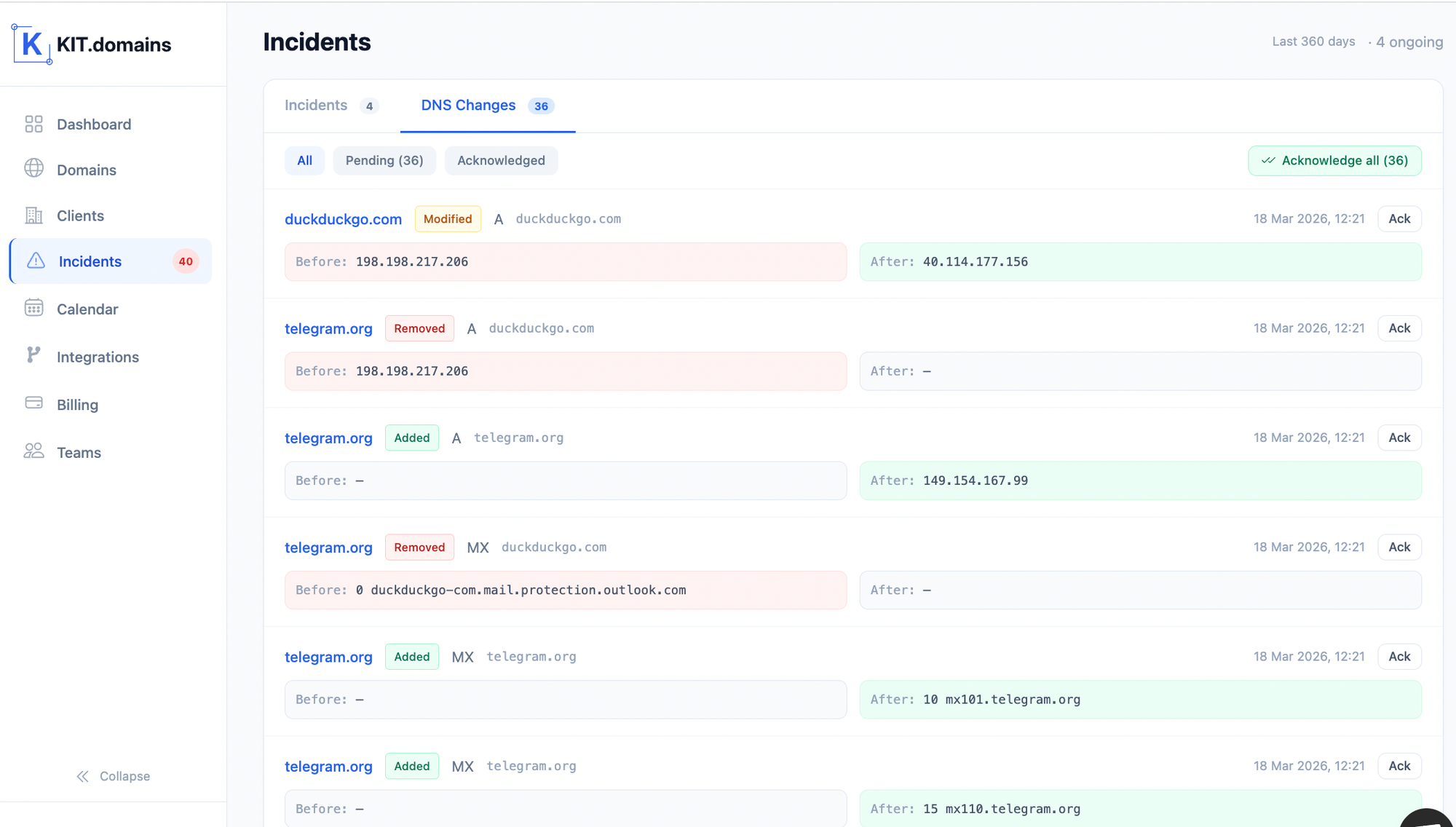
2. DNS Change Detection
DNS changes can happen due to:
- human error
- developer updates
- registrar issues
- security breaches
3. Domain Expiration Monitoring
Missed domain renewals are one of the most common MSP failures.
Consequences:
- immediate downtime
- loss of domain ownership
- SEO damage
4. SSL Certificate Monitoring
SSL certificates expire silently.
When they do:
- browsers show “Not Secure”
- users lose trust
- conversions drop
DNS Monitoring vs Uptime Monitoring
Many MSPs rely on uptime monitoring tools - but they’re not enough.
| Feature | Uptime Monitoring | DNS Monitoring |
|---|---|---|
| Website availability | ✅ | ✅ |
| DNS changes | ❌ | ✅ |
| Email (MX records) | ❌ | ✅ |
| Domain expiration | ❌ | ✅ |
| SSL monitoring | ❌ | ✅ |
Uptime tools tell you something broke
DNS monitoring tells you what broke and why.
Common DNS Issues MSPs Face
1. DNS Changes Without Notification. A record is modified - no one notices.
2. Expired Domains. A missed renewal leads to downtime.
3. DNS Hijacking. Attackers redirect traffic or intercept email.
4. Broken Email Routing. MX records are changed incorrectly.
5. SSL Expiration. Certificates expire overnight.
These issues are preventable - with proper monitoring.
How to Monitor DNS Across Multiple Domains
Managing DNS at scale requires automation.
Step 1: Centralize All Domains
MSPs often manage domains across:
- GoDaddy
- Namecheap
- Cloudflare
Logging into each registrar is inefficient and error-prone.
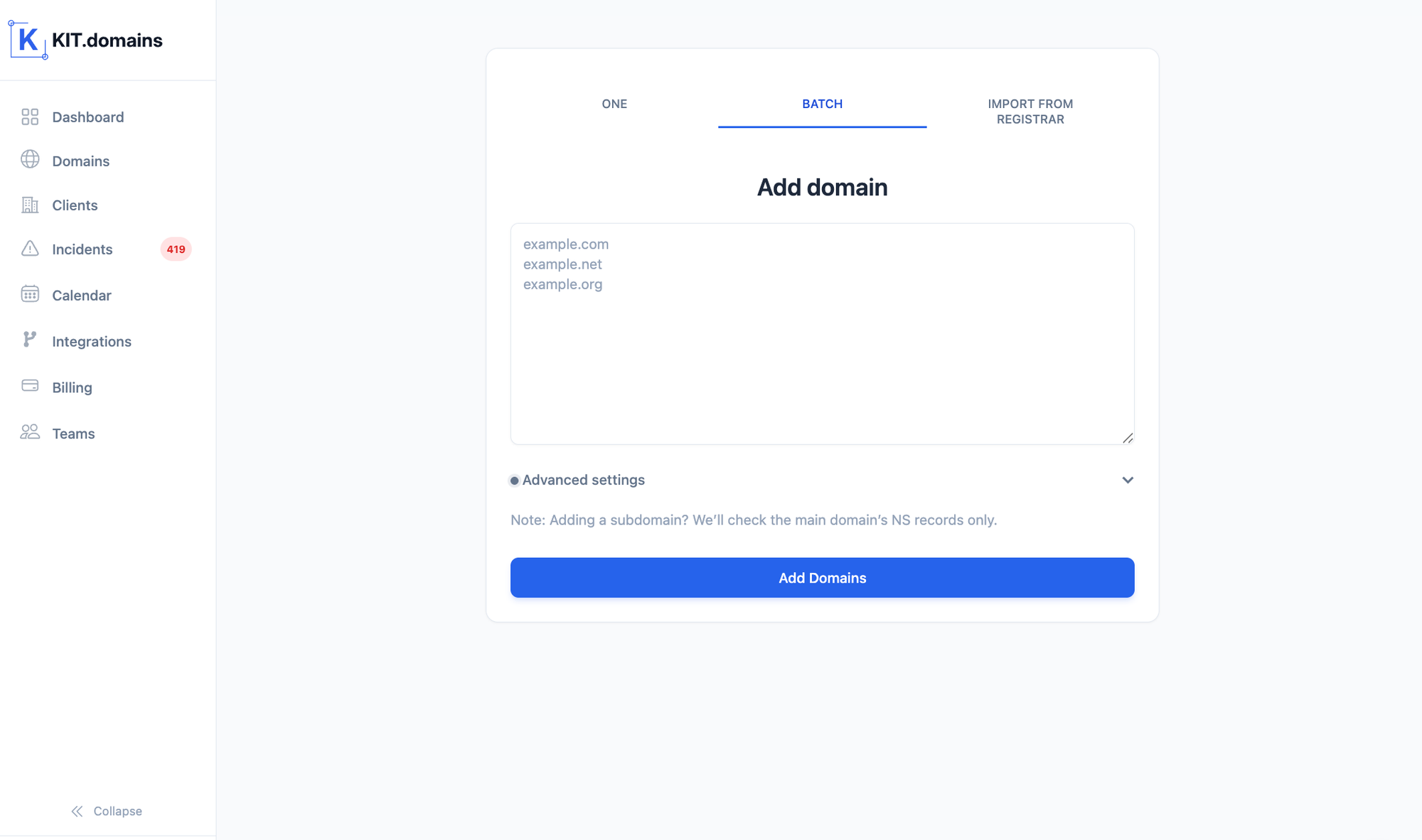
Using a centralized platform, you can:
- import domains via API or bulk upload
- view all domains in one dashboard
- manage everything centrally
Step 2: Enable Real-Time DNS Monitoring
Manual checks are not enough.
Automated tools like KIT.domains continuously monitors DNS records and detects changes instantly.
Step 3: Automate Expiration Tracking
Instead of tracking dates manually:
- domain expiration
- SSL certificates
are automatically monitored with proactive alerts.
Step 4: Set Up Alerts Your Team Won’t Miss
Email alerts are often ignored.
Modern MSP teams use:
- Slack
- Telegram
- Webhooks
- HaloPSA
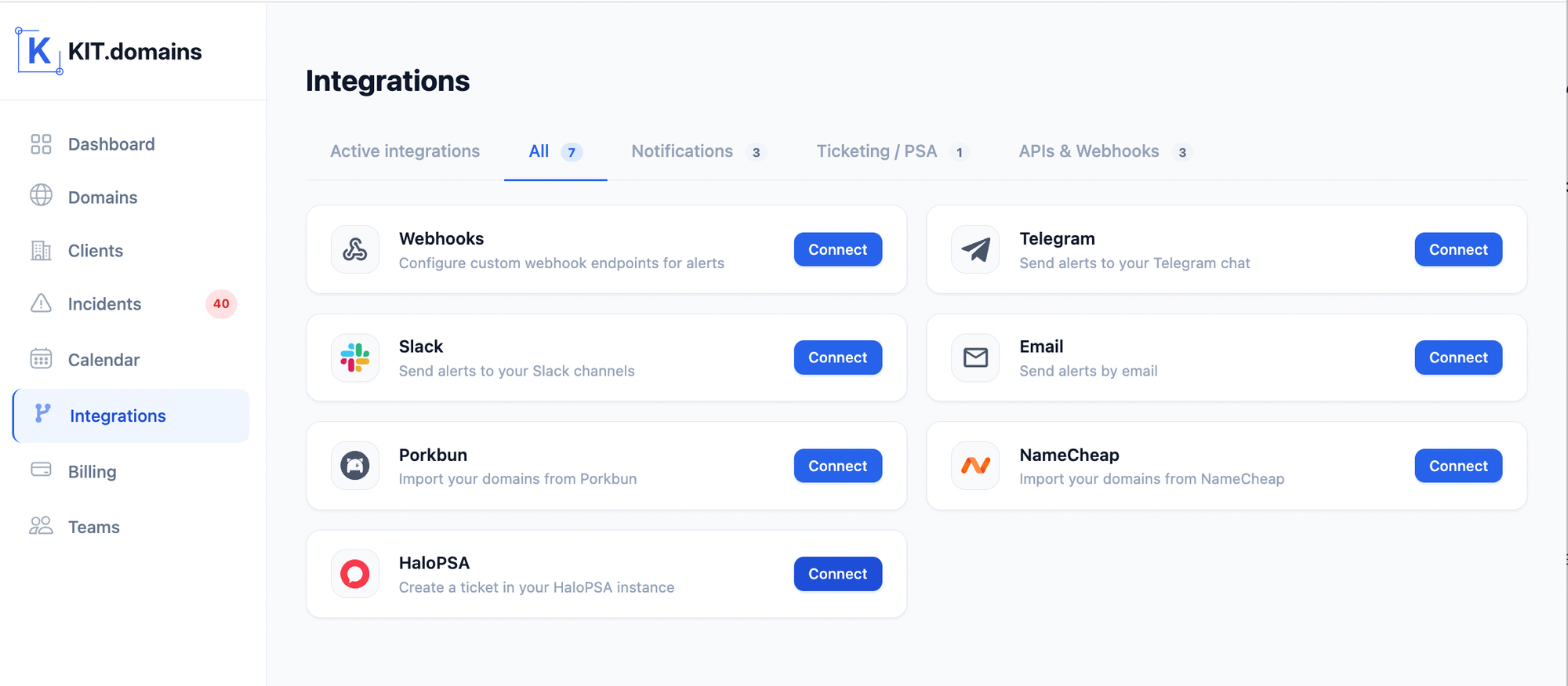
KIT.domains integrates with all of these, ensuring alerts reach your team instantly.
Step 5: Integrate With Your Workflow
DNS monitoring should be part of your operations.
With modern monitoring solutions, you can:
- trigger alerts into PSA systems
- automate ticket creation
- integrate with existing workflows
DNS Integrity Monitoring: The Missing Layer
DNS integrity monitoring ensures that your DNS records remain unchanged unless intended.
This is critical for:
- preventing DNS hijacking
- protecting email systems
- maintaining domain control
KIT.domains tracks DNS integrity in real time and alerts you if MX or NS records shift.
Scaling DNS Monitoring for 100+ Domains
MSPs and agencies managing large portfolios follow one rule:
If it’s manual, it will fail
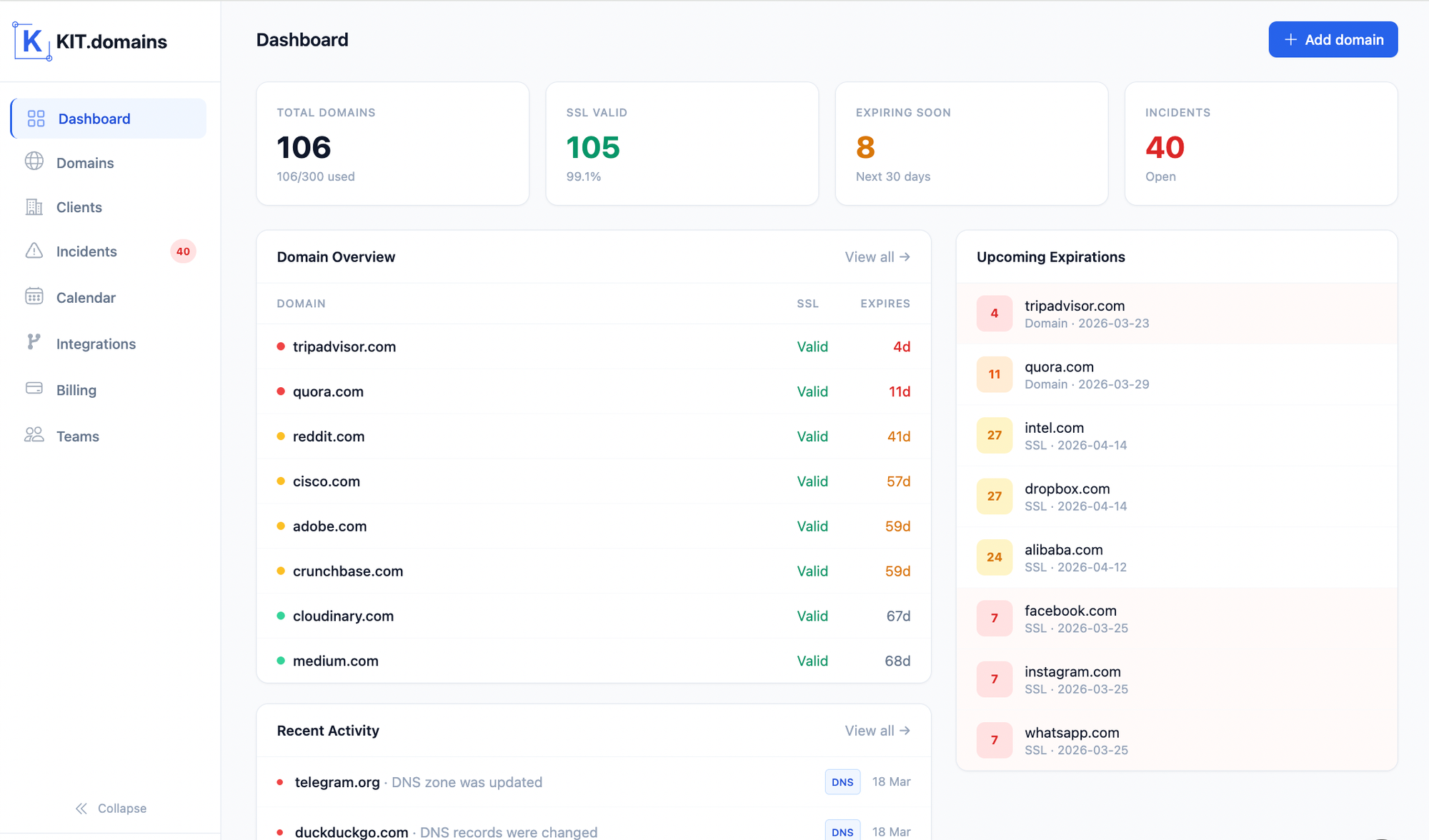
They rely on:
- centralized dashboards
- automated monitoring
- real-time alerts
- workflow integrations
With KIT.domains, teams can:
- manage hundreds of domains
- reduce incidents
- improve client trust
Manual vs Automated DNS Monitoring
| Feature | Manual Tracking | KIT.domains |
|---|---|---|
| Monitoring | Periodic | 24/7 automated |
| DNS changes | Missed | Instant alerts |
| Expiration tracking | Manual | Automatic |
| Scaling | Limited | Unlimited |
| Alerts | Email only | Slack, Webhooks, PSA |
Best DNS Monitoring Tools for MSPs
When choosing a DNS monitoring tool, look for:
- real-time DNS change detection
- domain & SSL tracking
- centralized dashboard
- integrations (Slack, Webhooks, PSA)
- scalability
Many MSPs switch to KIT.domains because it combines all of these in one platform built specifically for managing client domains.
Why MSPs Choose KIT.domains
Unlike generic monitoring tools, KIT.domains is designed specifically for MSP workflows.
It helps teams:
- monitor entire domain portfolios
- detect DNS changes instantly
- track domain & SSL expiration
- receive alerts in Slack, Telegram, or PSA
- manage domains across all registrars
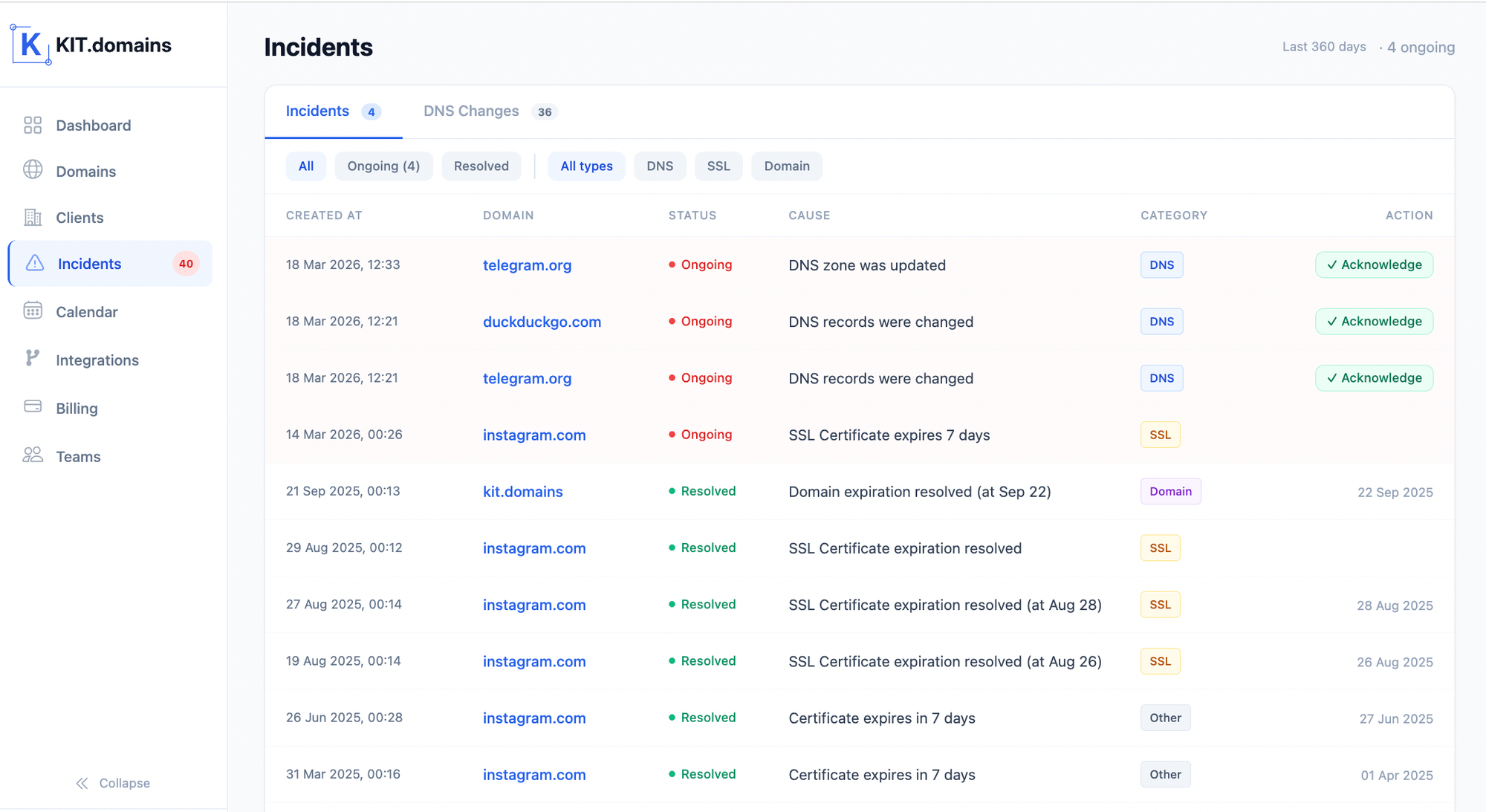
instead of reacting to problems, MSPs prevent them.
Conclusion: From Reactive to Proactive Monitoring
DNS issues are inevitable.
But client complaints are not.
The difference between reactive and proactive MSPs is: visibility + automation
With KIT.domains, you can:
- monitor DNS, SSL, and domains in one place
- detect issues before clients notice
- eliminate manual tracking
- scale your operations confidently
Start your 14-day free trial of KIT.domains. No credit card required.
Frequently Asked Questions
What is DNS monitoring for MSPs?
It is the process of tracking DNS records, domain status, and changes across client domains to prevent outages.
How do MSPs monitor DNS changes?
Using automated tools like KIT.domains that detect changes in real time and send alerts.
What is DNS integrity monitoring?
It ensures DNS records (MX, NS) are not changed unexpectedly, protecting infrastructure.
Why is DNS monitoring important?
Because DNS issues can break websites, email, and client trust - often without warning.