
Best DNS Monitoring Tools for MSPs (2026): Honest Comparison & What Actually Works
Choosing a DNS monitoring tool as an MSP is not about features - it’s about what breaks (and what doesn’t) across your client domains.
Modern MSP DNS monitoring requires more than uptime checks - it requires full visibility into DNS changes, domain expiration, and SSL health across all client portfolios.
Because when DNS fails:
- websites go offline;
- email stops working;
- traffic disappears.
And in most cases - your client notices before you do
That’s exactly what the right DNS monitoring tool should prevent.
In this guide, we break down the best DNS monitoring tools for MSPs in 2026, compare their real capabilities, and show which ones actually work for managing client domain portfolios.
What DNS Monitoring Actually Means (For MSPs)
DNS monitoring for MSPs is fundamentally different from traditional infrastructure monitoring.
Most tools define DNS monitoring as:
- checking resolution time;
- verifying availability.
But for MSPs, that’s not enough. Real DNS monitoring includes:
- DNS record change detection (MX, NS, A);
- domain expiration tracking;
- SSL certificate monitoring;
- alerting across your team;
- visibility across all client domains.
Without this - you’re only monitoring symptoms, not causes.
Why Most DNS Monitoring Tools Fall Short
Most tools on the market were built for:
- DevOps teams;
- infrastructure monitoring;
- uptime tracking.
Not for managing dozens or hundreds of client domains.
This leads to a critical gap:
- no domain ownership visibility;
- no expiration tracking;
- no DNS integrity monitoring.
Which is exactly where most incidents start.
This is why many DNS monitoring tools for MSPs fail to provide the visibility teams actually need.
Best DNS Monitoring Tools for MSPs in 2026
Below are the most relevant DNS monitoring software solutions for MSPs in 2026.
1. KIT.domains
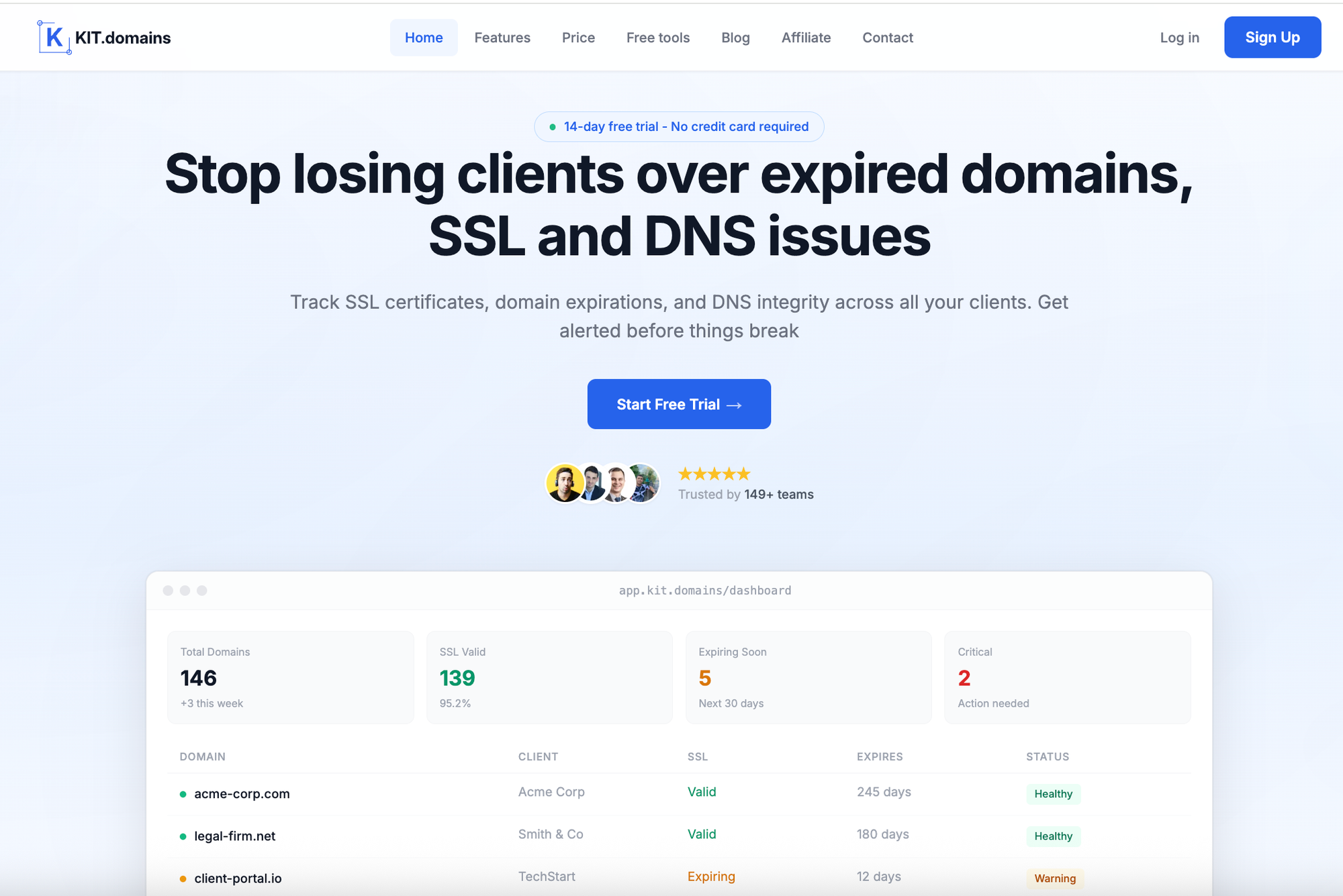
Best for: MSPs and IT teams managing client domain portfolios across multiple registrars.
KIT.domains is built for one specific problem most tools ignore: managing dozens (or hundreds) of client domains without missing critical issues
When domains expire, DNS changes, or SSL breaks - your client doesn’t care why. They expect you to know before it happens.
Key Capabilities:
- Real-time DNS change detection (MX, NS). Detect email issues and DNS changes instantly.
- Domain expiration monitoring across registrars. Prevent downtime caused by missed renewals.
- SSL certificate tracking. Avoid “Not Secure” warnings and trust loss.
- Centralized domain dashboard. Manage all client domains in one place.
- Smart alerting (Slack, Telegram, Webhooks, HaloPSA). Alerts your team actually sees.
- API & bulk import. Onboard entire portfolios in minutes.
What Makes It Different
Most tools tell you when something is already broken. KIT.domains shows you what’s about to break - and why.
Instead of monitoring servers, it monitors:
- domain ownership;
- DNS integrity;
- expiration timelines;
- critical infrastructure changes.
So your team can act before clients notice anything.
Why MSPs Choose KIT.domains
Without it:
- domains live in spreadsheets;
- alerts are inconsistent;
- DNS issues are reactive.
With it:
- monitoring is automated;
- everything is centralized;
- alerts are proactive;
- turning domain management into a reliable system.
Where It Fits
- MSPs;
- Agencies;
- Teams managing 50-500+ domains.
2. Better Stack
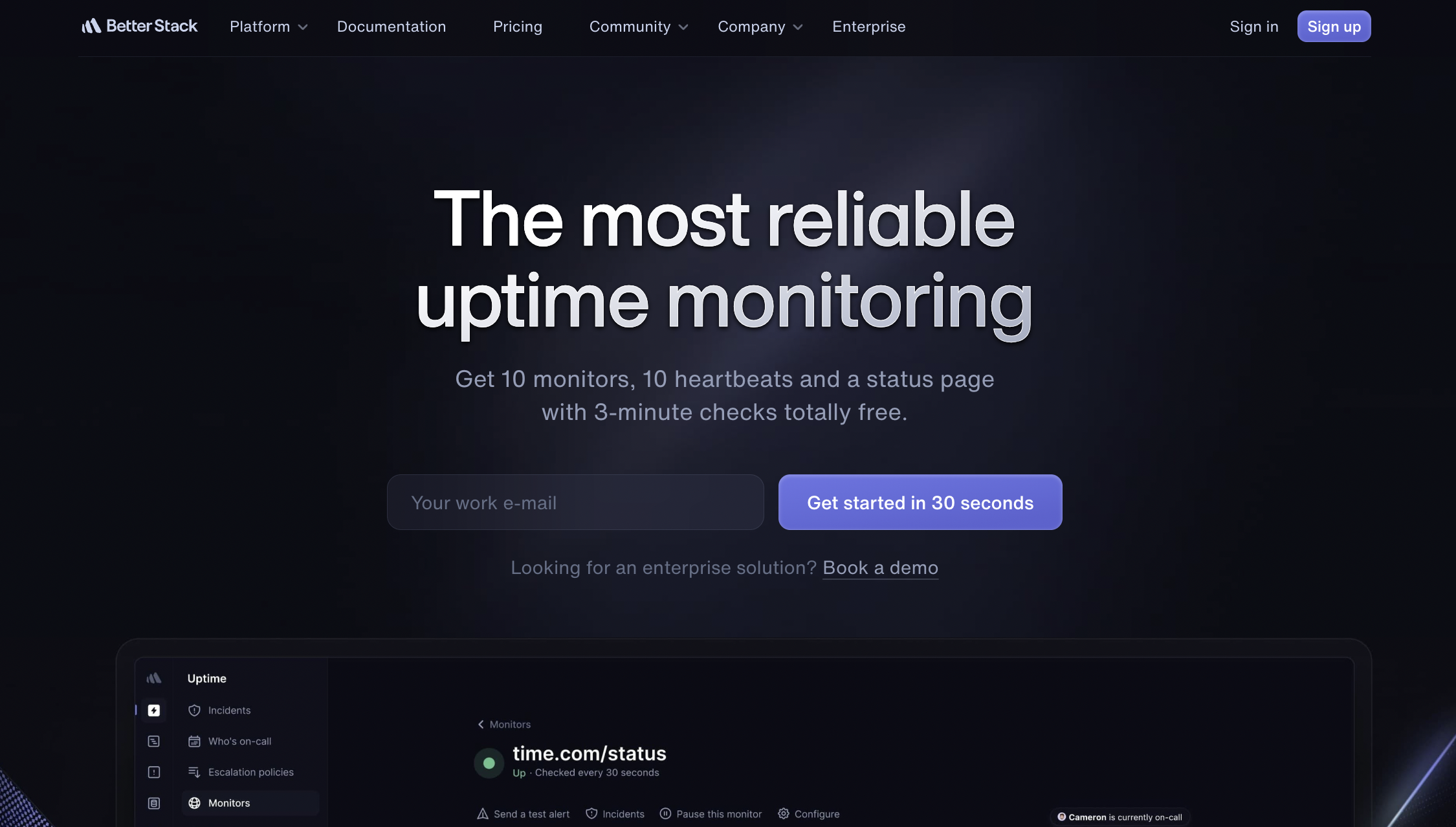
Best for: uptime monitoring and incident management.
Better Stack is a powerful platform combining uptime monitoring, alerting, and incident response workflows.
Strengths
- frequent uptime checks from multiple locations;
- strong alerting system (Slack, SMS, Webhooks);
- incident management & on-call scheduling;
- integrations with modern observability stack.
DNS Capabilities
- DNS checks available on higher-tier plans;
- domain (TLD) expiration monitoring included.
Limitations for MSPs
- DNS is not the core focus;
- no centralized domain portfolio view;
- no DNS change detection (MX/NS level).
You’ll know when something is down, but not what caused it.
3. Site24x7
Strengths
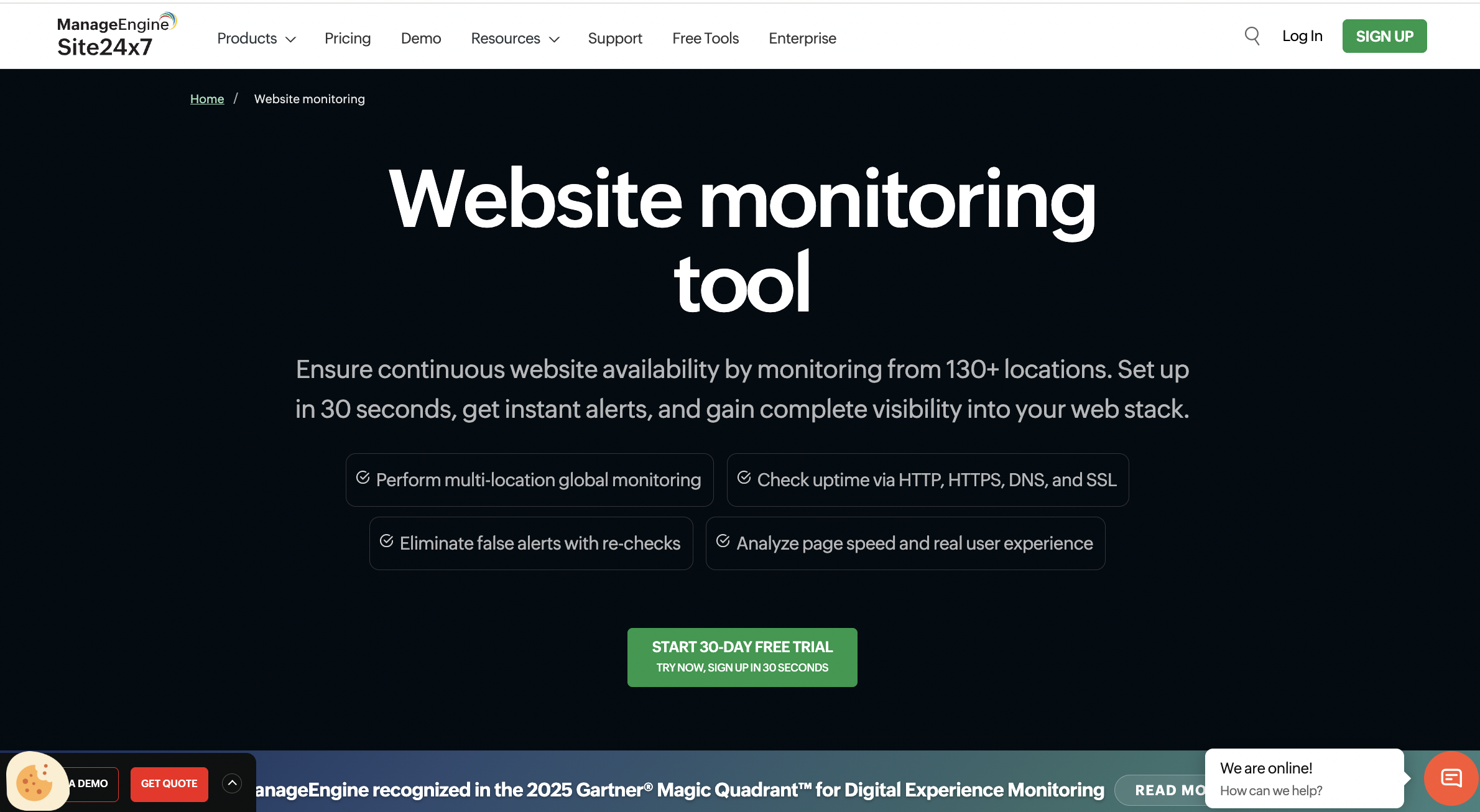
- DNS lookup and response monitoring;
- global monitoring network;
- full-stack observability.
Limitations
- focuses on performance, not domain lifecycle;
- no strong domain expiration workflow;
- not designed for multi-client domain management.
4. Dotcom-Monitor
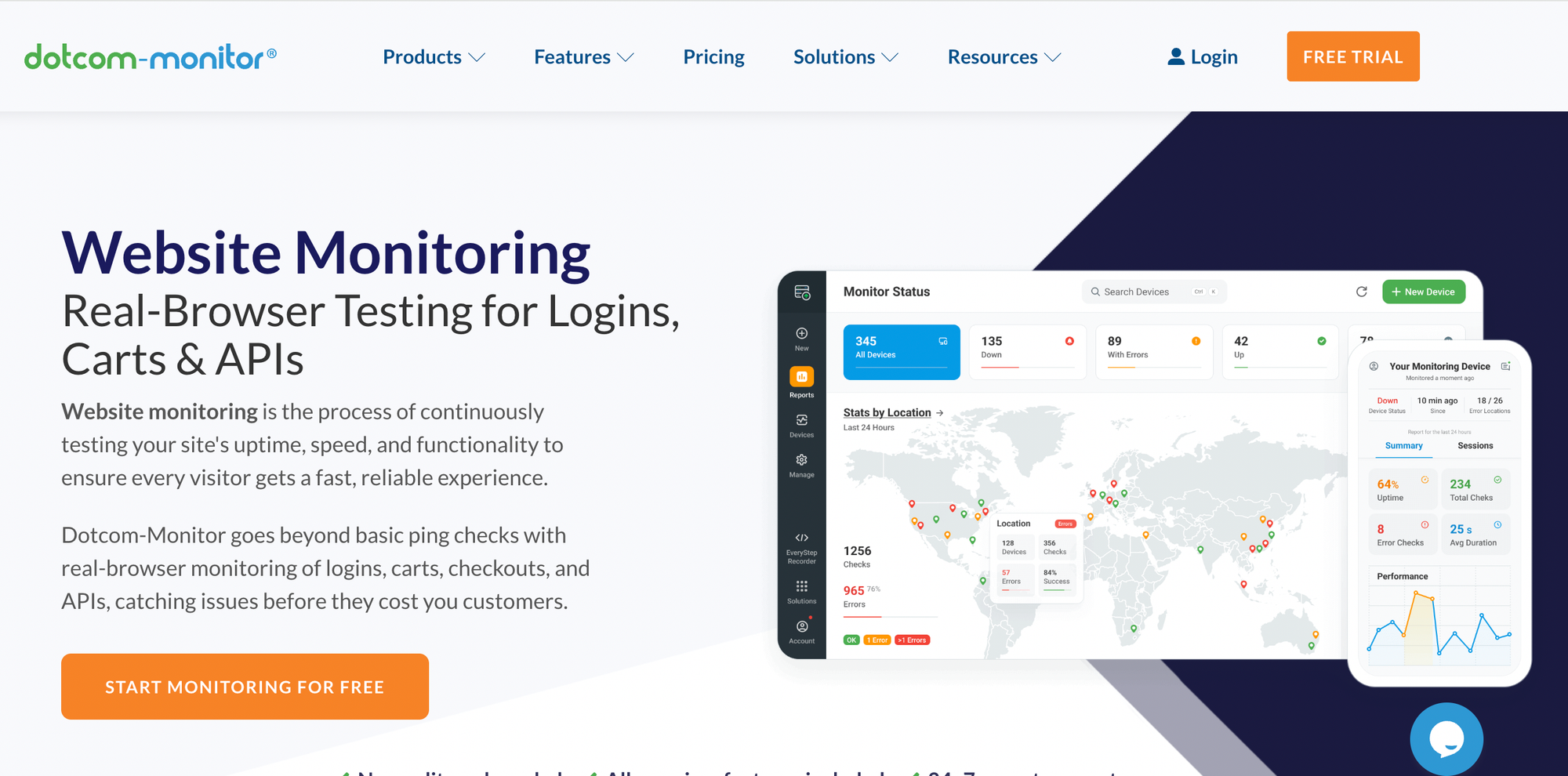
Best for: tracking DNS resolution across regions.
Strengths
- supports multiple DNS record types;
- DNS trace and resolution visibility;
- global monitoring locations.
Limitations
- no domain ownership tracking;
- no centralized domain dashboard;
- limited automation for MSP workflows.
5. Datadog

Best for: DevOps and infrastructure teams.
Strengths
- deep network visibility;
- DNS performance metrics;
- powerful filtering and tagging.
Limitations
- requires setup and maintenance;
- no domain lifecycle tracking;
- not designed for domain portfolios.
6. PRTG
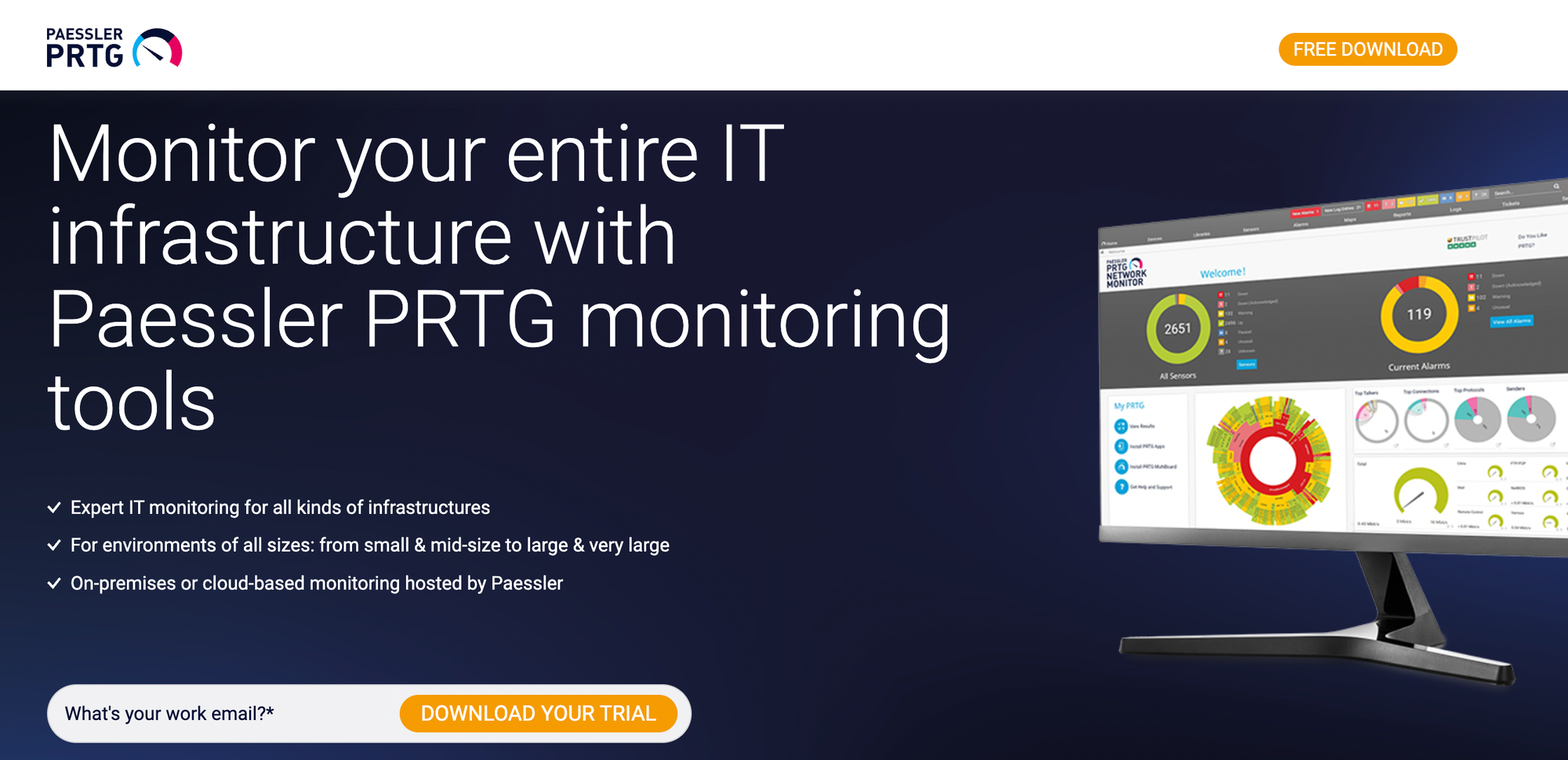
Best for: on-premise infrastructure monitoring.
Strengths
- DNS query monitoring via sensors;
- broad infrastructure coverage.
Limitations
- complex setup;
- licensing tied to infrastructure;
- no domain-centric view.
7. Uptrends

Best for: synthetic monitoring.
Strengths
- global checkpoints;
- DNS record checks;
- alerting integrations.
Limitations
- no domain portfolio management;
- limited DNS lifecycle visibility.
8. ThousandEyes

Best for: large-scale enterprise monitoring.
Strengths
- DNS path and resolution visibility;
- performance diagnostics;
- automated discovery.
Limitations
- expensive;
- not MSP-focused;
- lacks domain-level control features.
What Most Tools Still Miss
After comparing all platforms, one gap is clear: most tools monitor performance - not ownership.
They don’t tell you:
- who owns the domain;
- when it expires;
- whether DNS was changed;
- if email routing is still correct.
How to Choose the Right DNS Monitoring Tool
Choosing the right DNS monitoring platform depends on how many domains you manage and how critical uptime is for your clients.
Choose based on your workflow:
Small setups (few domains) → uptime tools may be enough.
Growing MSPs → need alerts + visibility.
Multi-client portfolios → need:
- centralized control;
- DNS change detection;
- expiration tracking;
- workflow integrations.
This is where KIT.domains fits best.
Conclusion: Monitoring Is Not Enough - Control Is
If your DNS monitoring tool only tells you when something is down - you’re reacting.
Effective DNS monitoring for MSPs means knowing what changed, what will expire, and what might break - before it impacts your clients.
FAQ
What is the best DNS monitoring tool for MSPs?
Tools like KIT.domains are designed specifically for managing domain portfolios and DNS infrastructure.
What is DNS monitoring for MSPs?
DNS monitoring for MSPs involves tracking DNS changes, domain expiration, and SSL certificates across multiple client domains to prevent outages and security issues.
Do tools like Datadog or Better Stack monitor DNS fully?
They monitor DNS performance, but not domain ownership, expiration, or DNS integrity.