
Domain Expiration Monitoring: How to Never Miss a Renewal Again
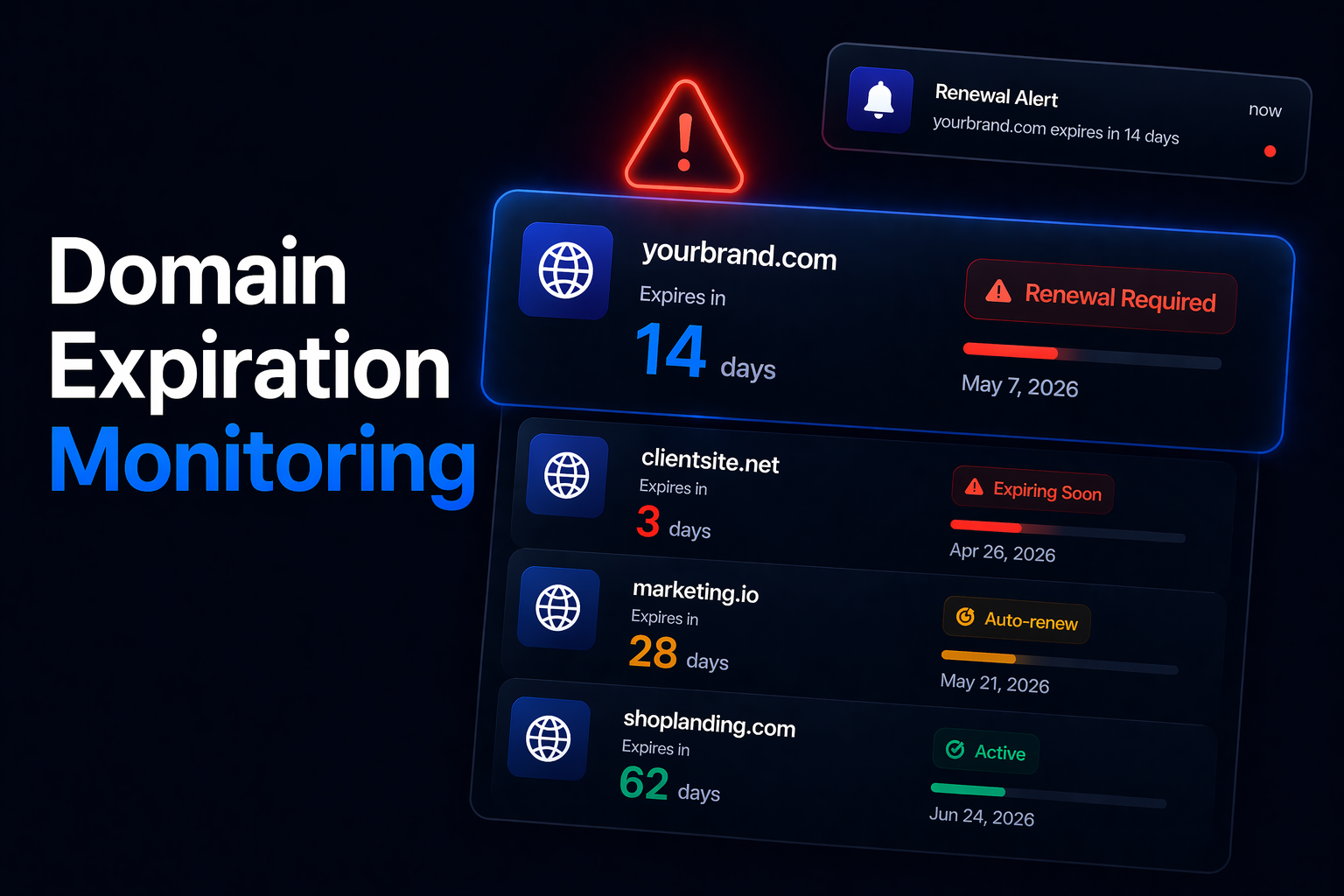
A domain renewal rarely feels urgent - until a domain expires. Everything can appear normal for months. Domains renew automatically. Registrars send reminder emails. Billing seems under control.
Then something quietly breaks.
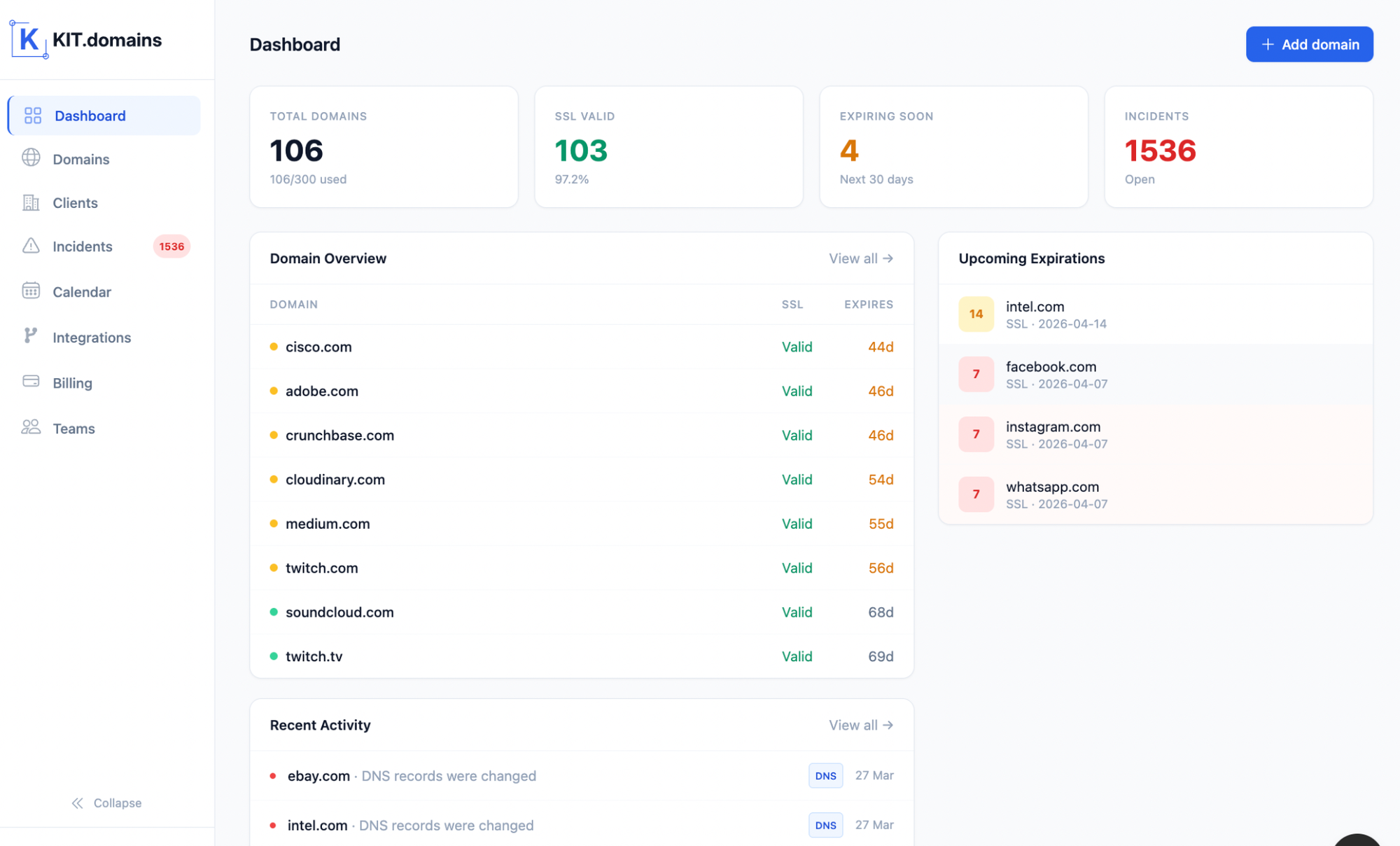
A payment method fails. A renewal notice gets buried in an inactive inbox. A domain registered years ago remains tied to a former employee’s account. Nobody notices the problem until the expiration date arrives.
That’s when websites go offline, email stops working, paid campaigns begin sending traffic to dead landing pages, and SSL certificates start failing. Internal teams scramble to understand what happened while customers begin noticing the disruption.
For agencies and managed service providers, the consequences can be even worse. One missed renewal can quickly turn into a damage client trust - even if the root cause was something as simple as an expired payment card.
The frustrating part is that these incidents rarely happen because teams completely forget about renewals. They happen because visibility breaks down long before expiration happens.
And by the time teams notice the issue, they’re no longer preventing a problem - they’re reacting to one.
That’s why domain expiration monitoring has become critical for companies managing multiple domains.
Why Domain Expiration Creates Bigger Problems Than Teams Expect
Many teams treat domain renewals as administrative work rather than infrastructure management.
That mindset creates unnecessary risk because domains sit at the center of critical services.
When a domain expires, the impact often spreads far beyond website downtime:
- email infrastructure can fail because MX records depend on the domain;
- paid campaigns may continue sending traffic to broken landing pages;
- customer portals may stop working;
- API endpoints connected to subdomains can fail unexpectedly;
- search visibility may suffer if downtime continues for too long.
In some cases, the situation becomes even more serious.
Expired domains can eventually become available for third-party registration. A competitor, domain reseller, or malicious actor may purchase the domain before the original owner recovers it.
At that point, what started as a missed renewal becomes a brand, security, and operational problem. And recovering an expired domain is usually far more expensive than preventing expiration in the first place.
What Domain Expiration Problems Look Like in Real Life
These incidents rarely begin with obvious warning signs.
A startup launches several campaign domains during a product launch and forgets to track renewal dates after the campaign ends. Months later, one of those domains powers a high-ranking landing page that suddenly disappears.
An agency manages domains for dozens of clients. One domain was originally registered using a former employee’s personal email address, and renewal notices continue going to an inbox nobody can access.
A growing SaaS company relies on auto-renew but doesn’t realize its billing card has expired. Several critical domains quietly move toward expiration without anyone noticing.
A company acquires another business and inherits dozens of domains spread across multiple registrars. Without a centralized inventory, renewal deadlines become nearly impossible to track manually.
These scenarios happen far more often than most teams realize. And they almost always begin with poor visibility.
Why Domain Expiration Happens So Often
The problem usually isn’t forgetfulness. It’s fragmented ownership.
Domains often end up spread across multiple registrars, outdated employee accounts, agency logins, old billing systems, and legacy infrastructure.
- Over time, organizations lose visibility into who owns what.
- Auto-renew creates a false sense of security because teams assume it completely solves the problem. It doesn’t.
- Payment methods expire, registrar settings change, ownership transfers create confusion, and internal responsibilities shift over time.
- Registrar reminder emails create another blind spot.
- Those emails often end up in outdated inboxes, shared mailboxes, former employee accounts, or addresses that nobody actively monitors.
The larger your domain portfolio becomes, the harder this gets.
Why Manual Domain Tracking Fails at Scale
Many teams still rely on spreadsheets, calendar reminders, or occasional registrar audits. That may work when you manage a handful of domains.
It becomes extremely unreliable once organizations begin managing dozens - or hundreds.
As companies grow, they acquire domains for products, regional markets, client projects, marketing campaigns, and brand protection. Documentation quickly becomes outdated, and visibility becomes fragmented across multiple registrars.
Eventually, teams lose the ability to quickly answer basic questions:
- Which domains expire next?
- Which domains are mission-critical?
- Which registrars own those domains?
- Who is responsible for renewals?
When teams can’t answer those questions quickly, expiration risk grows. The issue isn’t effort. Manual systems simply don’t scale.
How MSPs, Agencies, and Large Teams Handle This Differently
This problem becomes significantly harder for organizations managing large domain portfolios. Internal IT teams may manage dozens of domains.
Agencies, enterprises, SaaS companies, and managed service providers often manage hundreds across multiple clients, brands, products, and environments.
At that scale, manual renewal tracking becomes operationally dangerous.
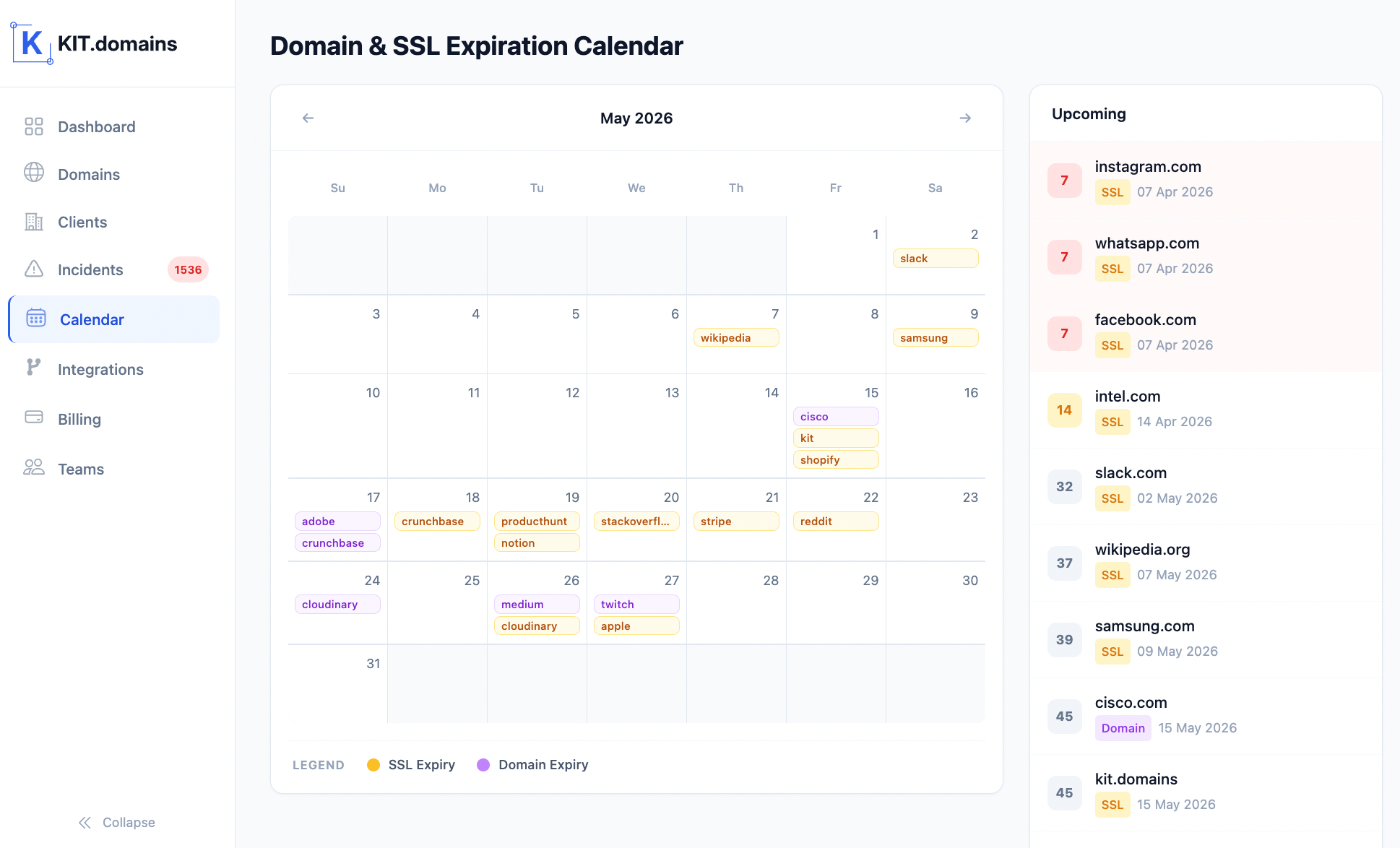
These teams need centralized visibility into all domains, registrars, expiration dates, and ownership risks. They also need domain expiration alerts early enough to act before renewals become incidents.
That’s why larger organizations increasingly invest in domain expiration monitoring services instead of relying on registrar emails and spreadsheets.
They treat domain renewals as infrastructure management - not administrative work.
How KIT.domains Helps Prevent Domain Expiration Issues
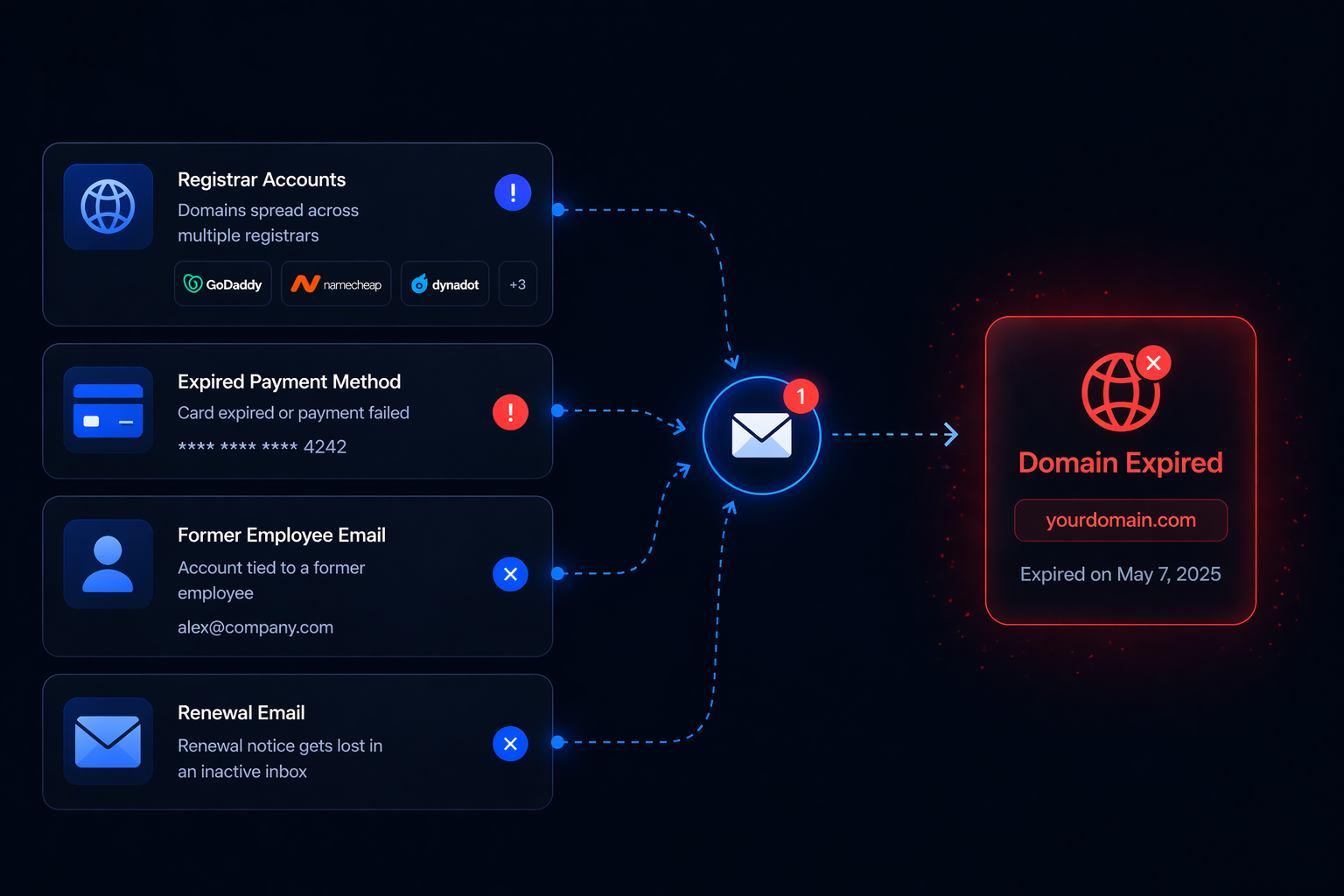
KIT.domains provides domain expiration monitoring across your entire portfolio from a centralized dashboard.
Instead of manually logging into multiple registrars, teams can instantly see upcoming expiration dates, renewal timelines, registrar ownership, and domain health in one place.
When renewal deadlines approach, automated alerts notify teams before expiration becomes a problem.
Teams can quickly identify:
- upcoming expirations
- domains spread across multiple registrars
- ownership risks
- renewal blind spots
- critical domains that require immediate attention
This gives agencies, SaaS teams, and MSPs a far more reliable way to manage large domain portfolios without constantly reacting to preventable issues.
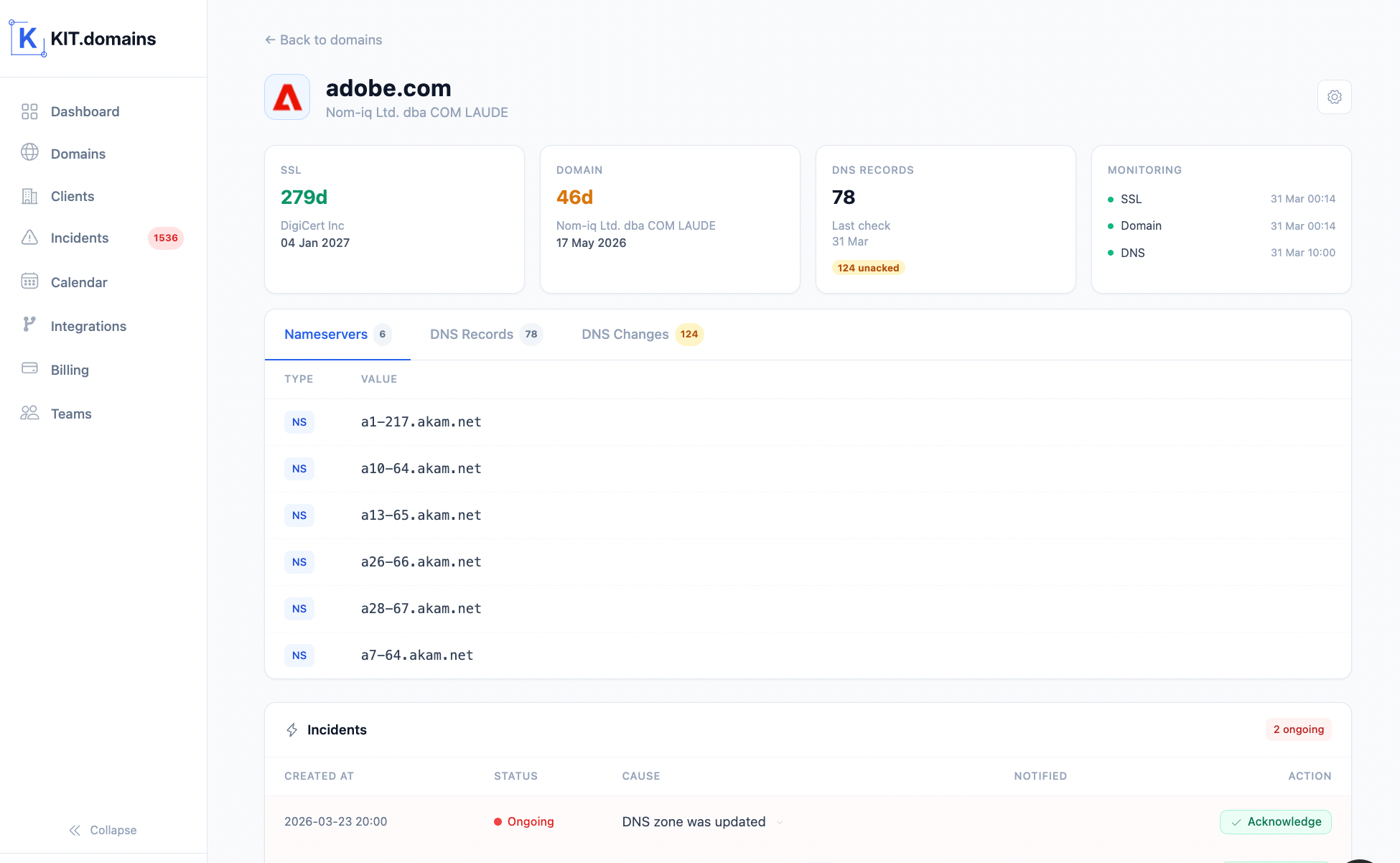
Instead of scrambling after a domain expires, teams stay ahead of renewal risks.
Why This Changes Client Relationships
Clients rarely care why a domain expired. They only care that their website stopped working. Or that email failed. Or that customer traffic disappeared.
Even if the root cause was an outdated billing card or registrar access issue, clients still see the failure as your responsibility.
That’s why proactive domain expiration monitoring protects more than infrastructure. It protects trust.
Teams that solve problems before clients notice them build stronger long-term relationships.
Conclusion
Most domain expiration incidents are completely preventable. They happen because teams rely on fragmented systems that were never designed to scale.
Auto-renew, registrar emails, and manual tracking can all help - but none of them provide complete visibility.
Domain expiration monitoring gives teams the visibility they need before renewals become outages. And that visibility prevents downtime, lost revenue, operational chaos, and damaged client relationships.
To monitor expiration, DNS changes, and SSL in one place, see our guide to domain monitoring platforms.
FAQ: Domain Expiration Monitoring
What is domain expiration monitoring?
Domain expiration monitoring helps teams track renewal deadlines across their domain portfolio and receive alerts before domains expire.
Does auto-renew fully prevent domain expiration?
No. Auto-renew can fail because of expired payment methods, billing issues, registrar configuration changes, or ownership problems.
What happens when a domain expires?
Websites may go offline, email can stop working, SSL certificates may fail, and domains may eventually become available for third-party registration.
How early should teams renew domains?
Most teams should begin reviewing renewals at least 30-60 days before expiration.
Why do agencies need domain expiration monitoring?
Agencies often manage large client domain portfolios across multiple registrars. Missing one renewal can create immediate client trust issues.