
Domain Monitoring at Scale: How MSPs Manage 100+ Domains Without the Chaos

Managing a handful of domains is simple. But once your MSP or IT team starts handling 50, 100, or even hundreds of domains across multiple clients, everything changes.
Domain monitoring at scale becomes a real operational challenge. Tracking domain expiration dates, monitoring DNS changes, and managing SSL certificates across different registrars is no longer something you can handle with spreadsheets or manual checks.
At this point, most teams hit what can be called the “scaling wall.
The Scaling Wall: Why Manual Domain Management Fails
As your domain portfolio grows, the tools and workflows that once worked start to break down. What used to feel manageable quickly turns into a fragmented and risky process.
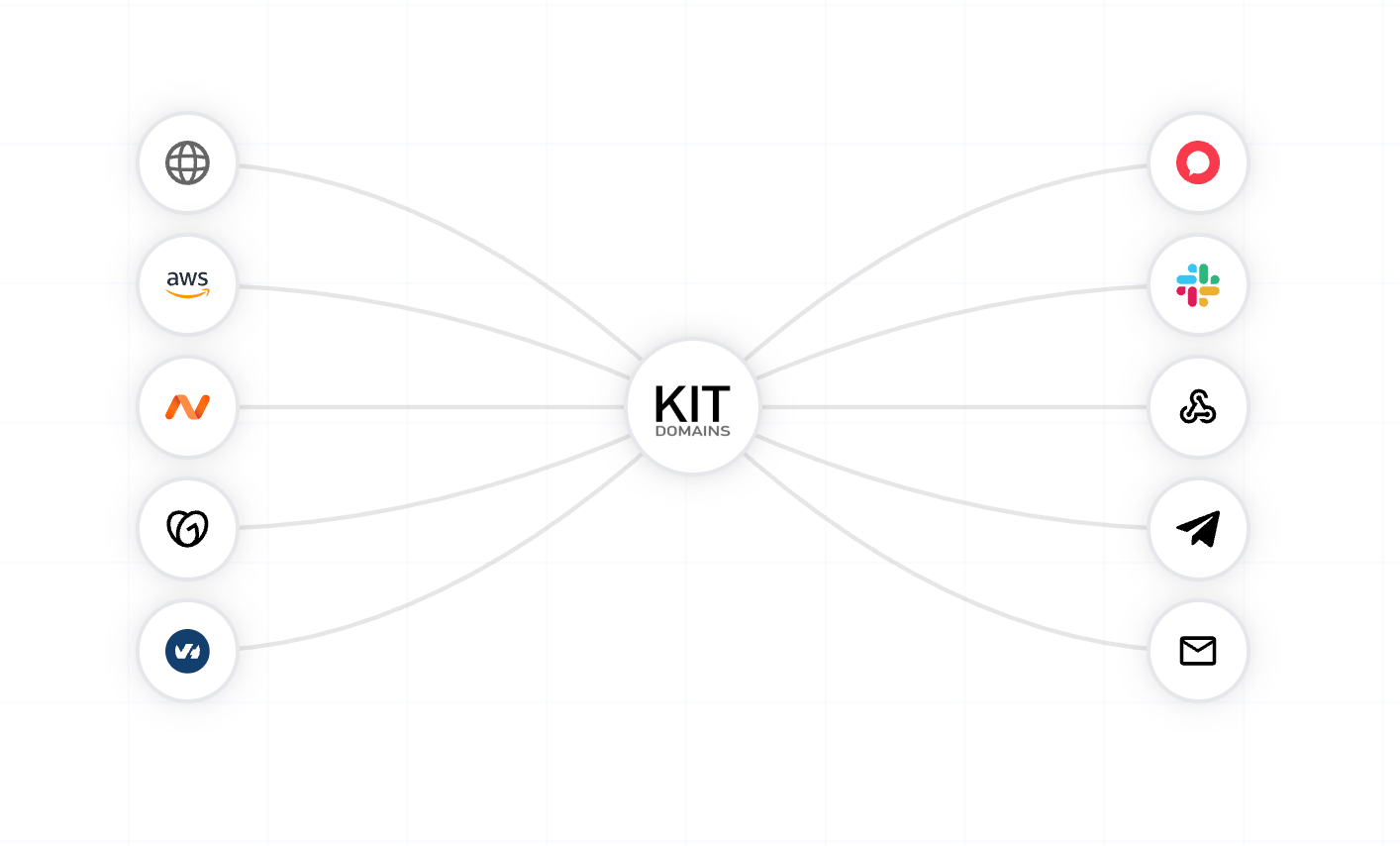
One of the first issues teams encounter is registrar sprawl. One client uses GoDaddy, another uses Namecheap, and a third relies on a local provider you’ve never worked with before. Logging into multiple dashboards just to check domain expiration dates or DNS settings becomes time-consuming and error-prone.
Then there’s the illusion of control that comes with spreadsheets. On paper, everything looks organized. In reality, manual tracking is always outdated. A spreadsheet reflects the past - not the current state of your infrastructure. In fast-moving environments, that delay creates blind spots.
Even more dangerous are silent DNS failures. A developer updates an A record. A third-party service modifies an MX record. A name server change goes unnoticed. Without proper DNS monitoring at scale, these changes often remain invisible until a client reports an issue.
This is where manual domain management breaks down - especially when dealing with multi-domain monitoring across different registrars and environments.
The 3 Pillars of Domain Monitoring at Scale
To manage a growing domain portfolio efficiently, teams need to shift from manual checking to automated monitoring. At scale, success depends on three core pillars.
1. Centralized Visibility (Your Single Source of Truth)
The foundation of scalable domain portfolio management is visibility.
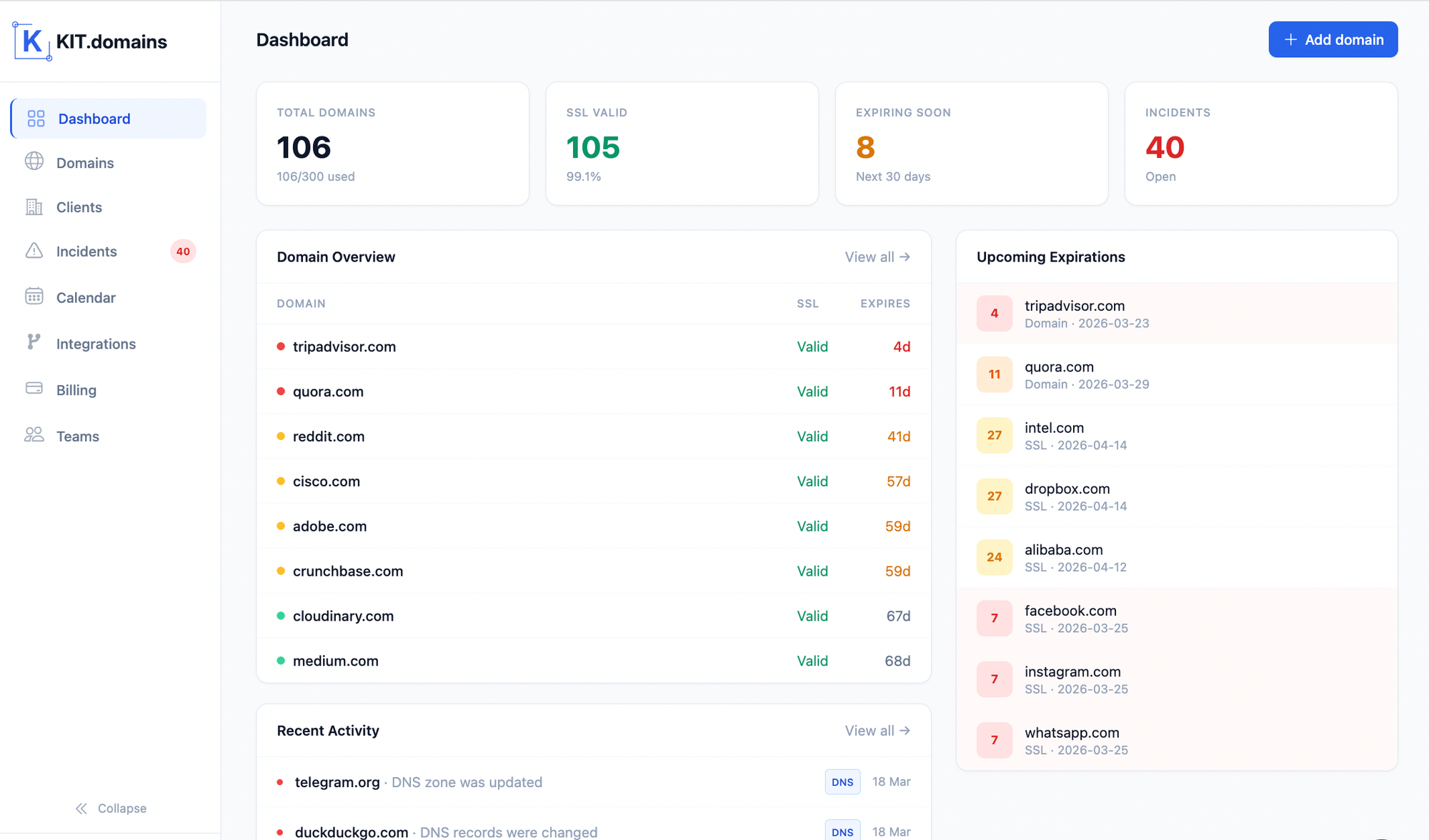
At scale, it shouldn’t matter where a domain is registered. Whether you manage 20 domains on Cloudflare or 200 across multiple providers, your team needs a centralized domain dashboard that shows everything in one place.
This includes:
- domain expiration status;
- SSL certificate health;
- authoritative name servers;
- DNS configuration overview.
Without centralized visibility, domain monitoring becomes fragmented, and critical issues are easy to miss.
2. Zero-Touch Automation
Manual processes don’t scale. Eventually, something gets missed.
If your team has to manually add every domain, SSL certificate, or DNS record to a tracking system, it creates unnecessary risk. At scale, you need domain management automation.
This means:
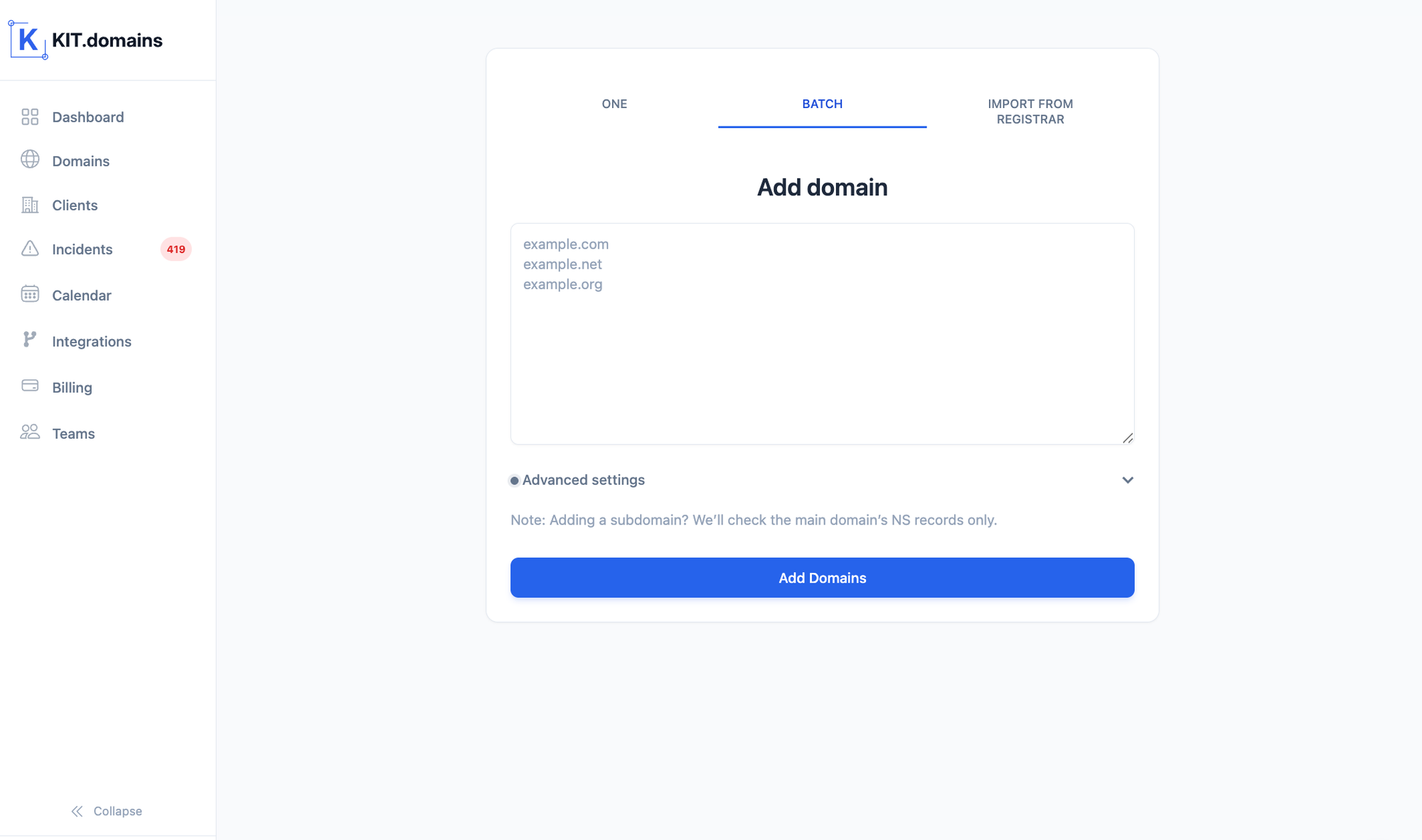
- automatic domain import via API;
- bulk domain onboarding;
- continuous syncing with registrars;
- automatic detection of new infrastructure.
This is what enables true multi-domain monitoring at scale - without increasing operational overhead.
3. Integrated Alerting (Beyond Email Notifications)
At 100+ domains, email alerts are no longer enough.
Most registrar notifications end up buried in inboxes, mixed with marketing emails and irrelevant updates. By the time someone notices, it’s already too late.
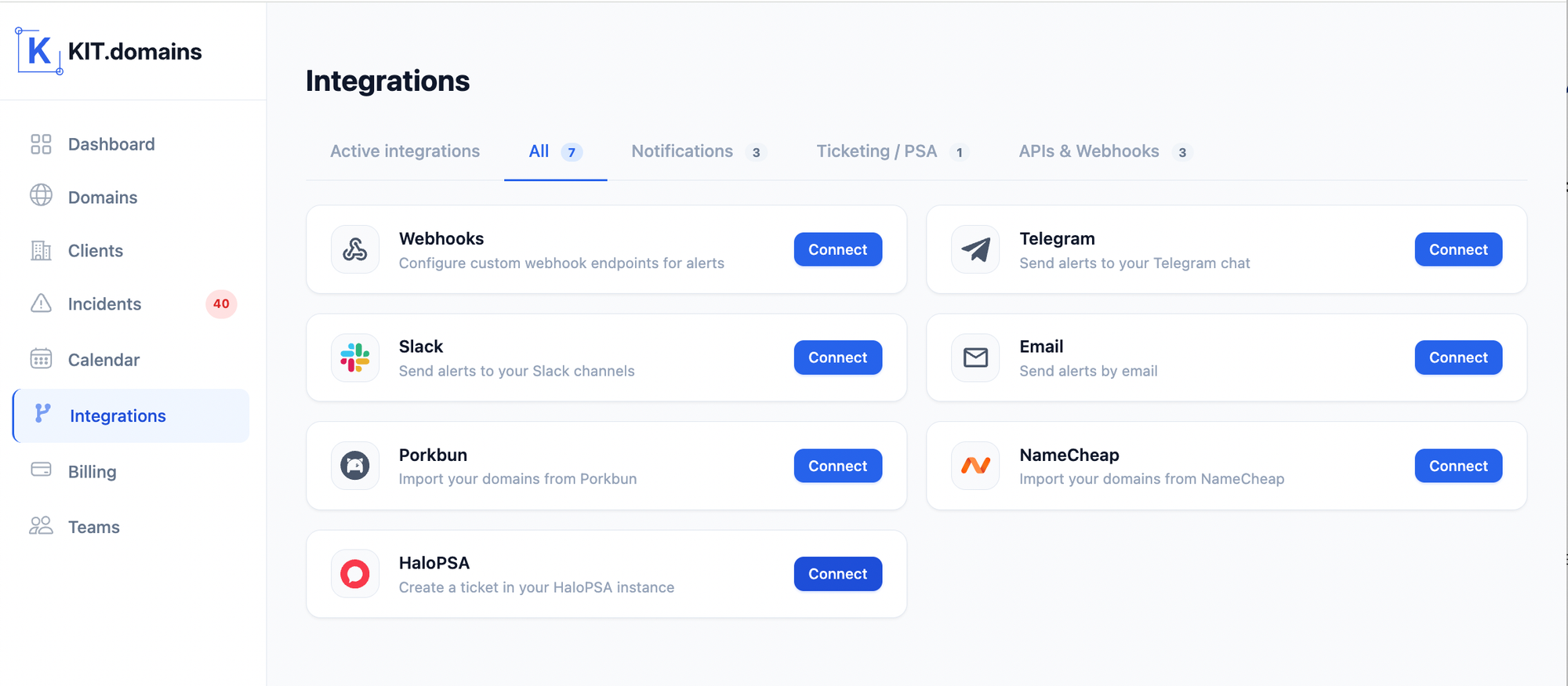
Effective domain monitoring tools for MSPs rely on integrated alerting systems that are:
- actionable - clear, specific, and relevant;
- real-time - delivered the moment something changes;
- contextual - sent directly to tools your team already uses.
Whether it’s Slack, Telegram, or a PSA system like HaloPSA, alerts should fit naturally into your workflow.
Without proper alerting, even the best monitoring system becomes passive instead of proactive.
What Scalable Domain Monitoring Looks Like in Practice
At scale, domain monitoring is no longer about checking individual domains one by one. It’s about building a system that continuously tracks your entire infrastructure.
A proper setup includes:
- domain expiration tracking across all clients;
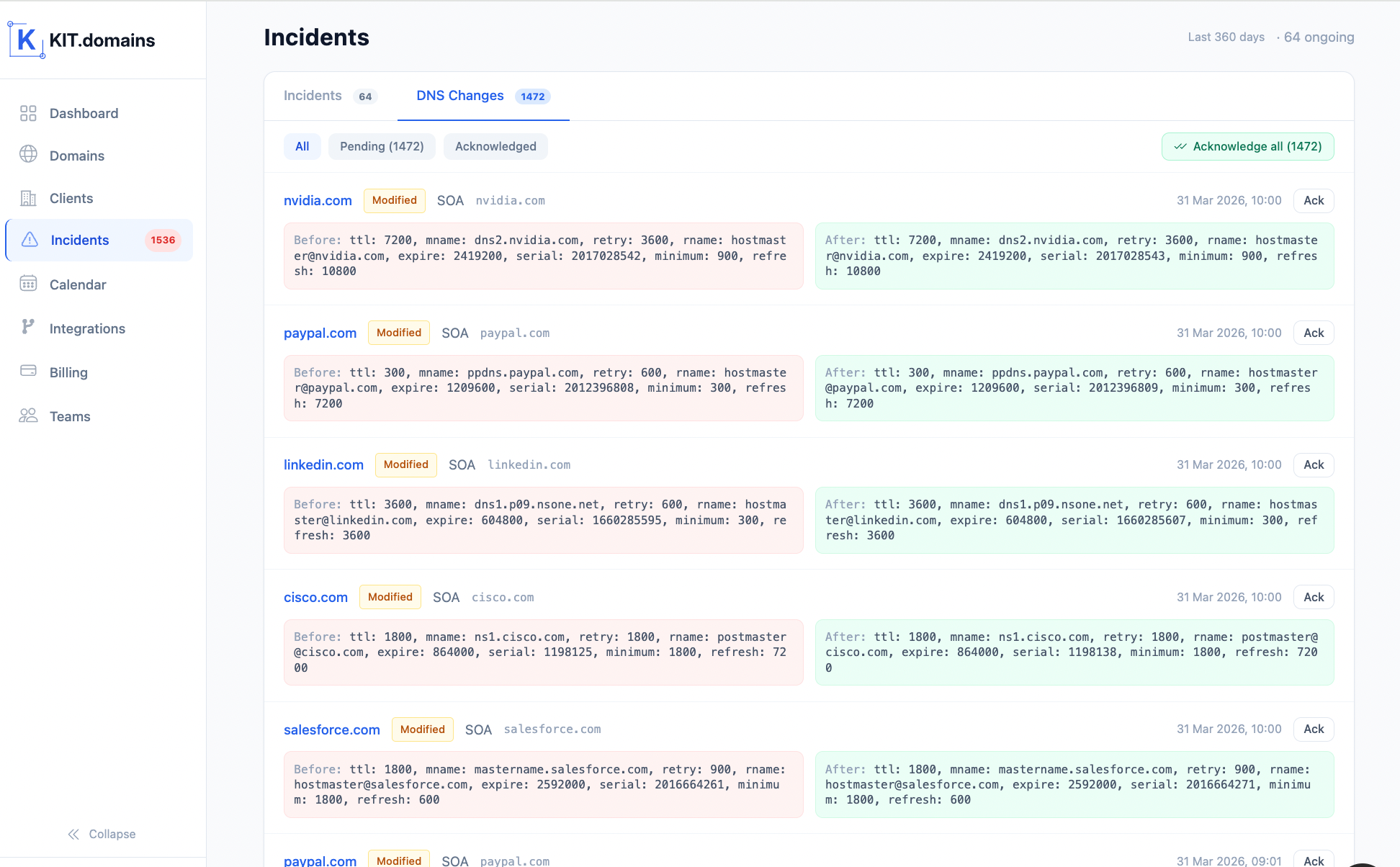
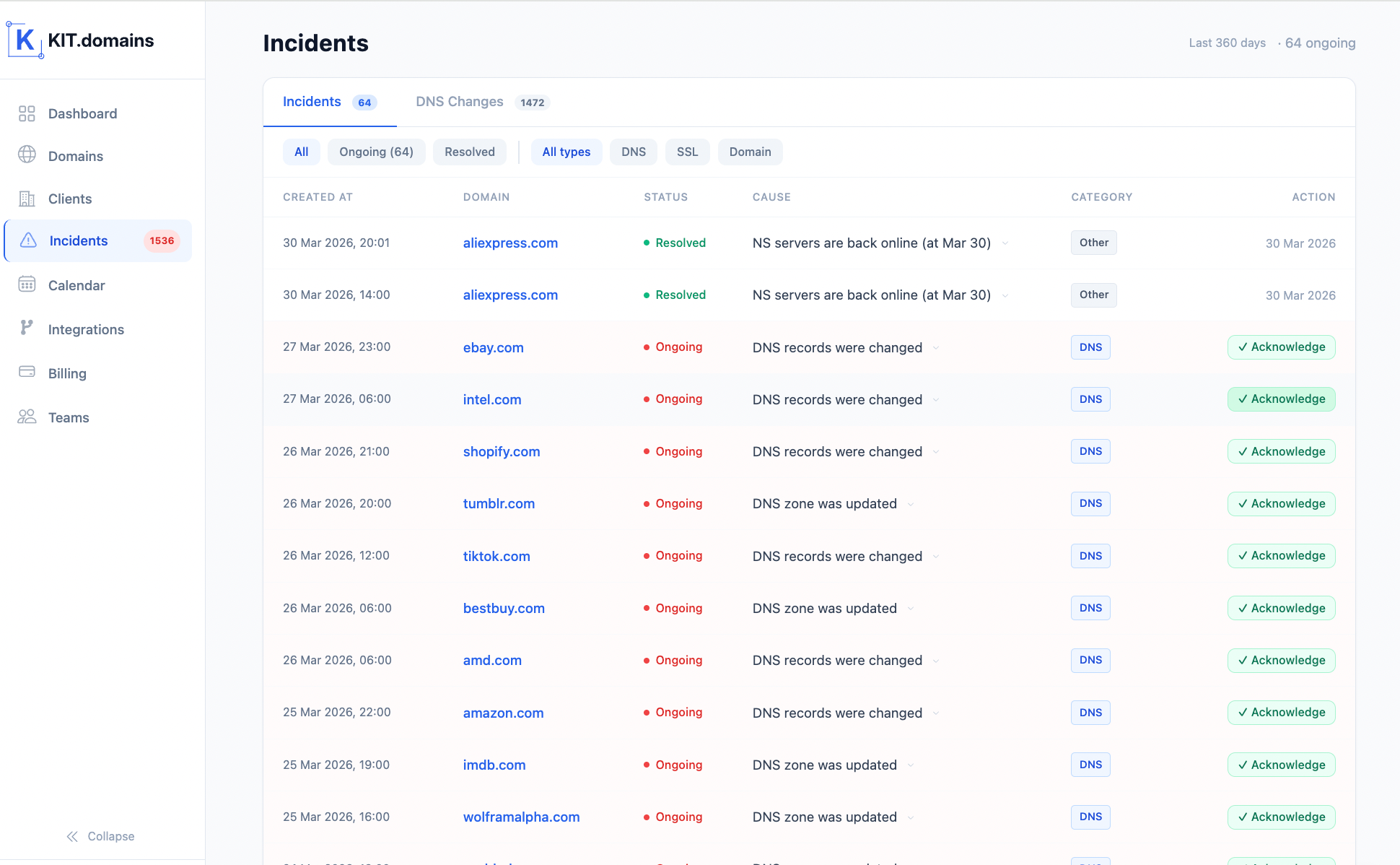
- real-time DNS change detection;
- SSL certificate lifecycle monitoring;
- domain availability and uptime tracking.
This is often referred to as domain portfolio management - and it’s becoming a core capability for modern MSPs.
Without it, teams are stuck reacting to problems instead of preventing them.
Turning Domain Monitoring Into a Proactive Service
For MSPs, domain monitoring shouldn’t just be an internal process. It can - and should - become a value-added service for clients.
When done right, it changes how clients perceive your role.
Instead of reacting to incidents, you start preventing them. Instead of explaining outages, you demonstrate control.
With proper monitoring in place, you can offer:
- Financial predictability
A clear renewal calendar helps clients understand upcoming costs and avoid unexpected expirations. - Infrastructure reliability
Continuous monitoring ensures domains, DNS, and SSL certificates remain stable. - Security assurance
With DNS change detection and DNS integrity monitoring, you can identify unauthorized changes before they cause damage.
This shift - from reactive support to proactive infrastructure management - is what separates average MSPs from high-performing ones.
How Modern Platforms Solve the Scale Problem
This is exactly where modern platforms like KIT.domains come into play.
Instead of juggling spreadsheets, registrar dashboards, and scattered alerts, teams get a centralized domain monitoring platform designed specifically for managing large domain portfolios.
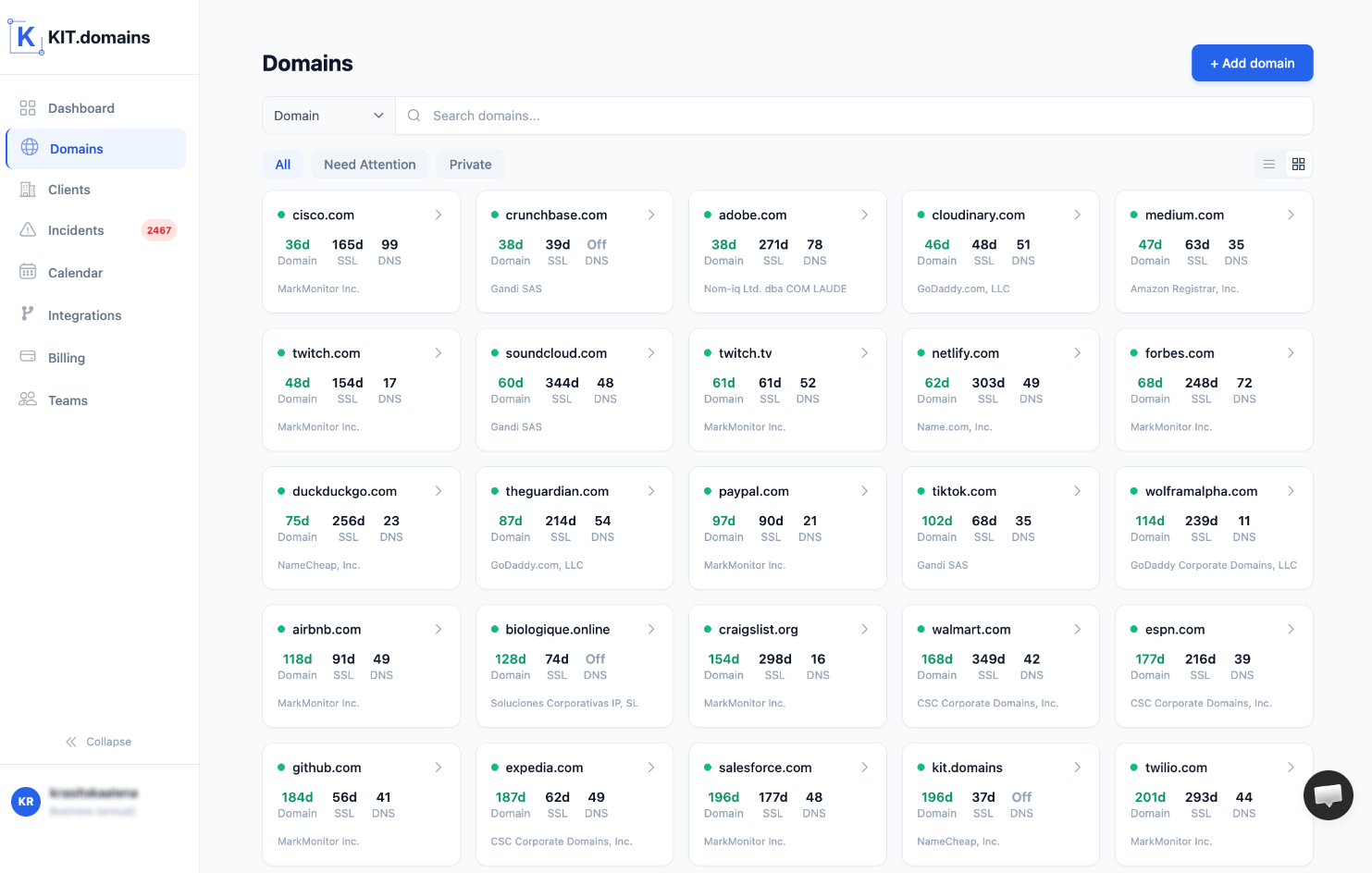
With a unified approach, domain monitoring becomes significantly more manageable:
- a registrar-agnostic view of all domains;
- bulk domain management and organization;
- combined monitoring of domains, SSL, and DNS;
- real-time alerts integrated into your workflow.
This allows teams to move away from manual tracking and toward a fully automated, scalable system.
More importantly, it frees up time. Instead of spending hours checking expirations or debugging DNS issues, your team can focus on higher-value work.
Conclusion: Stop Reacting, Start Scaling
Scaling your MSP operations means removing bottlenecks.
If your team is still manually checking domain expirations, relying on spreadsheets, or hoping DNS records don’t change unexpectedly, you’re operating with a system that will eventually fail.
Moving to a centralized, automated domain monitoring platform isn’t just about efficiency - it’s about building a foundation for growth.
It’s the difference between managing domains manually and running a scalable domain infrastructure.
Manage your domain portfolio like a pro. Start your free trial with KIT.domains today.
FAQ: Managing Domains at Scale
What is domain monitoring at scale?
Domain monitoring at scale refers to tracking and managing large numbers of domains (typically 50, 100, or more) across multiple clients. It includes monitoring domain expiration dates, DNS changes, SSL certificates, and uptime using automated tools.
What is the biggest risk of managing many domains manually?
The biggest risk is human error. Missing a single domain expiration or failing to notice a DNS change can lead to downtime, lost traffic, or even domain loss.
Can I monitor domains from different registrars in one place?
Yes. Modern domain monitoring platforms are registrar-agnostic, meaning they provide a unified view regardless of where domains are registered.
How does DNS monitoring help with client retention?
DNS monitoring allows MSPs to detect issues before clients notice them. This shifts the relationship from reactive support to proactive management, increasing trust and long-term retention.
What tools do MSPs use to manage multiple domains?
MSPs typically use domain monitoring platforms that offer centralized dashboards, automation, and real-time alerts for domain expirations, DNS changes, and SSL issues.