
How to Prevent DNS Issues Before Clients Notice
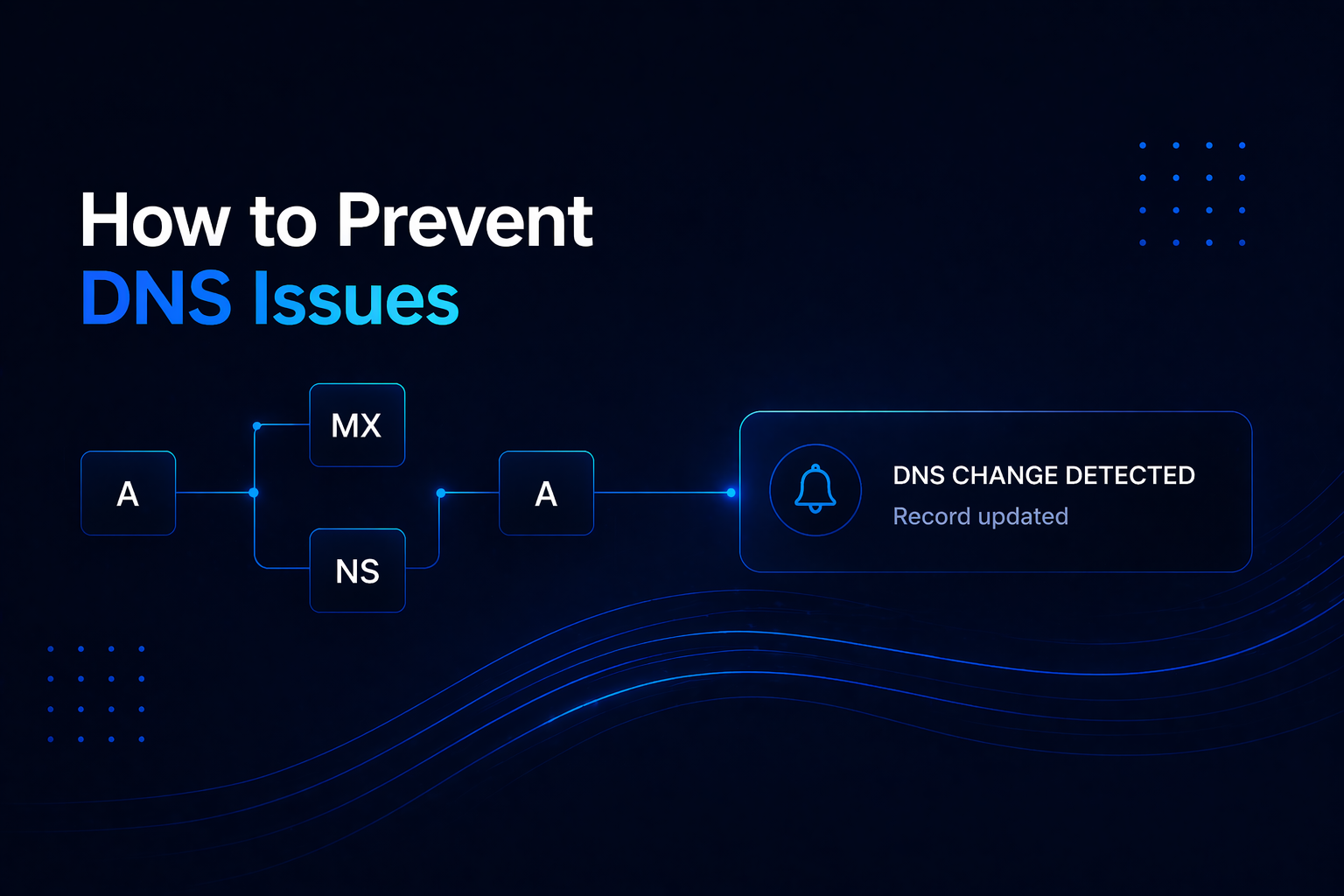
Most DNS problems don’t begin with a clear failure. Many teams struggle to understand how to prevent DNS issues before clients notice them.
There’s no crash, no alert, no obvious sign that something is wrong. Instead, things start to drift.
- A DNS record is updated during a routine change.
- A provider syncs incorrectly.
A configuration is slightly modified - not enough to break everything, but enough to cause subtle issues. At first, everything appears normal.
Then a client sends a message:
- “Hey, something feels off. Emails aren’t coming through.”
- “Traffic dropped - did anything change?”
- “Our site loads, but something isn’t working.”
And now you’re already in reactive mode.
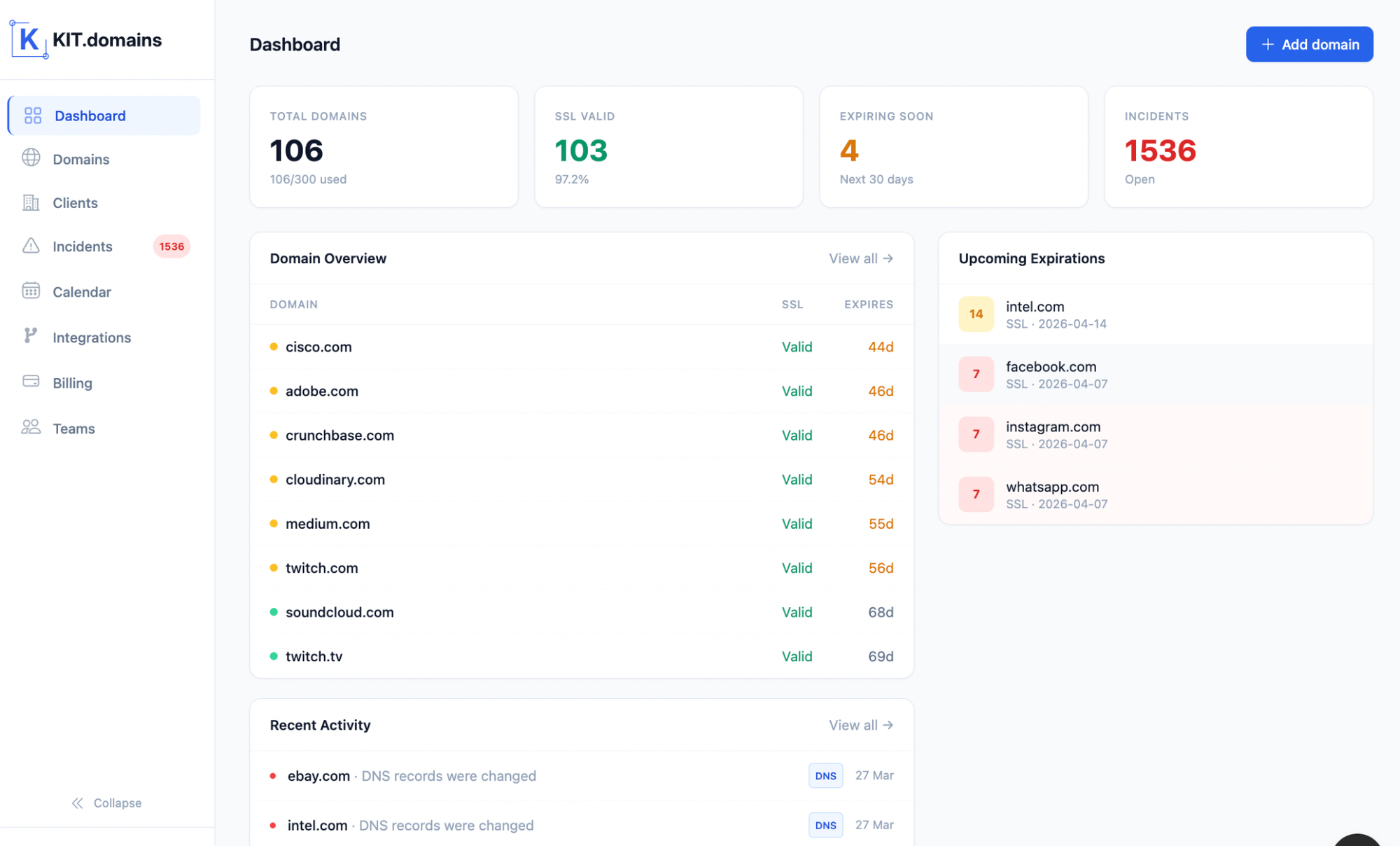
The reality is simple: by the time a DNS issue becomes visible to a client, it has already been affecting their business.
Preventing DNS issues isn’t about reacting faster. It’s about making sure they never reach that point.
Why DNS Issues Are Different From Typical Outages
Most teams are used to monitoring uptime.
If a server goes down, tools detect it. Alerts are triggered. The issue is visible. DNS doesn’t behave like that.
A DNS issue can exist without taking a website offline. In fact, many DNS-related problems don’t impact availability at all - at least not immediately.
- A site can still load while email stops working.
- A landing page can work while API endpoints fail.
- Traffic can silently route to the wrong destination without triggering any uptime alerts.
This is what makes DNS particularly dangerous.
It operates beneath the surface, quietly controlling how traffic, services, and communication flow - without announcing when something goes wrong.
And because of that, traditional monitoring approaches miss the early warning signs entirely.
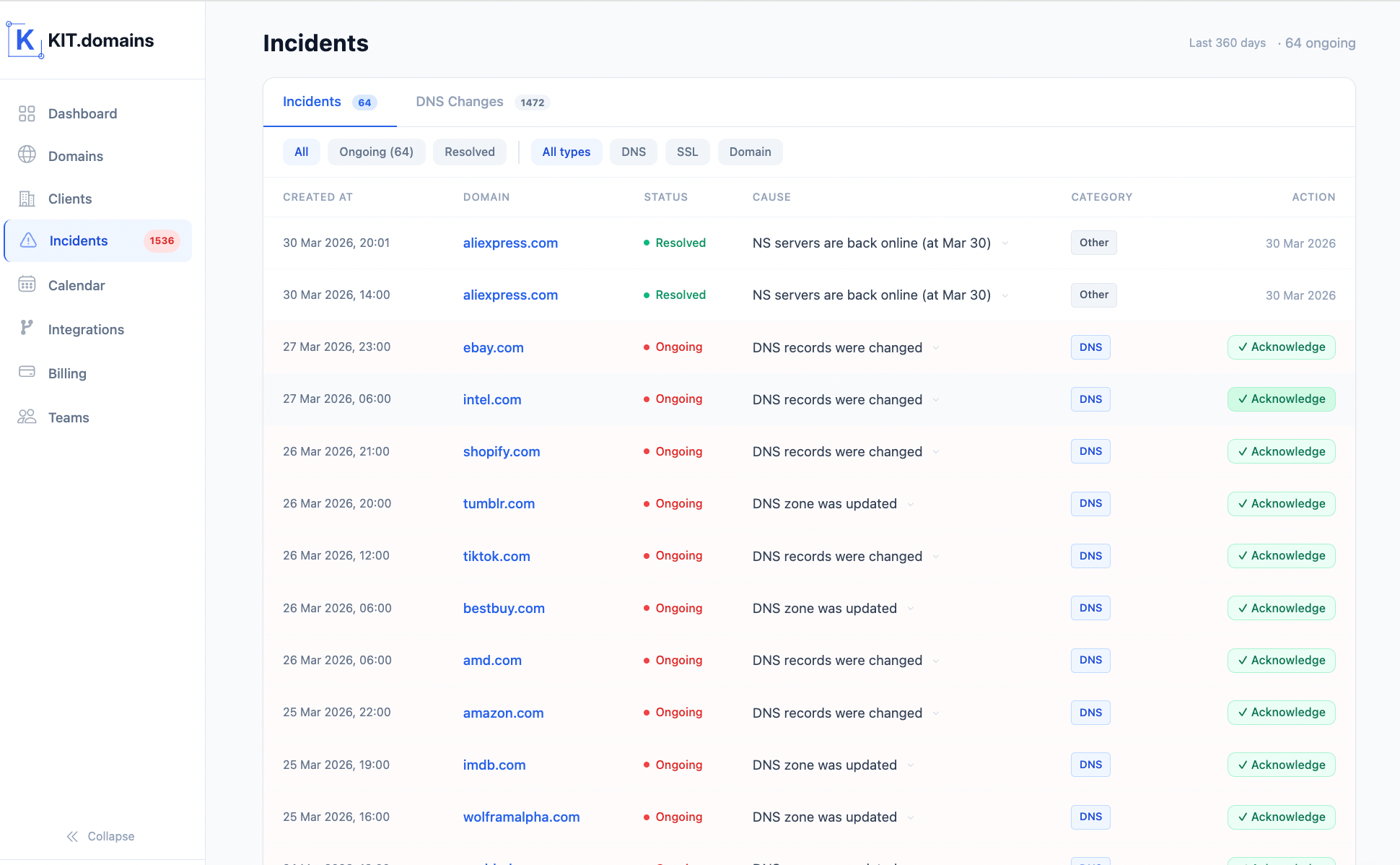
This is why traditional DNS monitoring often fails to detect issues early.
What DNS Issues Actually Look Like in Real Life
There’s a common misconception that DNS failures are dramatic and obvious. In practice, they’re subtle and fragmented.
A team might update an A record during a deployment, not realizing it overwrites an existing configuration. The website still loads for some users, but others begin experiencing inconsistencies. No alert is triggered, and the issue persists quietly.
In another case, an MX record is modified during a migration. The website continues to function, but email delivery becomes unreliable. Messages are delayed or lost, and the problem is only discovered when a client notices missing communication.
Nameserver changes can be even more dangerous. A domain might still resolve, but it’s no longer pointing to the correct infrastructure. From the outside, everything appears operational, but internally, control has shifted.
These are not edge cases. They happen regularly - especially in environments where multiple teams, tools, or providers interact with the same DNS configuration.
The key problem is not that DNS breaks. It’s that it breaks quietly.
Why Most Teams Only Discover DNS Problems Too Late
The issue isn’t a lack of tools. It’s a mismatch between what teams monitor and where problems actually occur.
Most monitoring setups are built around availability. They answer one question: “Is the service up?” DNS issues don’t always affect that.
So teams rely on:
- uptime checks;
- registrar notifications;
- occasional manual verification.
And all of these approaches share the same limitation - they detect problems after they’ve already caused impact.
A registrar might send a notification about a change, but those messages are often delayed or buried in inboxes. Manual DNS checks depend on someone remembering to look. Uptime monitoring only reacts when the system fails completely.
None of these methods are designed to answer a more important question: “What changed?”
Without that visibility, DNS becomes a blind spot.
The Shift From Reactive Monitoring to Prevention
Preventing DNS issues requires a fundamental shift in how teams think about monitoring.
Instead of focusing on whether something is working, modern teams focus on whether something has changed. This approach is known as DNS change monitoring.
That difference may seem small, but it completely transforms how issues are detected.
When you monitor changes, you don’t wait for failure. You catch the moment something deviates from the expected state.
- A record update becomes visible immediately.
- A configuration drift is detected as it happens.
- An unexpected modification is flagged before it causes damage.
This approach turns DNS from a passive system into something observable and controllable.
And once you have that visibility, prevention becomes possible.
What Proactive DNS Monitoring Looks Like
In practice, preventing DNS issues means building a system that continuously observes the state of your domain infrastructure. This is the foundation of proactive DNS monitoring.
This isn’t about manually checking records or reviewing dashboards once a week. It’s about creating a live understanding of your environment.
At the core of this approach is change detection
Every DNS record - whether it’s an A record, MX configuration, or nameserver - has a known state. When that state changes, the system captures it instantly.
But detection alone isn’t enough. Context is what makes that information actionable.
You need to understand what changed, when it changed, and how it compares to the previous configuration. Without that, teams are forced to investigate manually, which slows down response and increases risk.
Alerting is equally critical
If change detection happens silently, it defeats the purpose. Alerts need to reach the team immediately, in environments where they can actually respond - not hours later in an inbox.
And finally, all of this needs to be centralized
When domains are scattered across registrars, environments, and clients, visibility becomes fragmented. A centralized view allows teams to see the full picture - current state, recent changes, and potential risks - in one place.
This combination of detection, context, alerting, and visibility is what turns monitoring into prevention.
To prevent DNS issues effectively, teams need real-time visibility into DNS changes, instant alerts, and centralized control.
How KIT.domains Helps Prevent DNS Issues
This is exactly the problem KIT.domains is designed to solve. Instead of treating DNS as a static configuration, it treats it as a dynamic system that needs continuous monitoring.
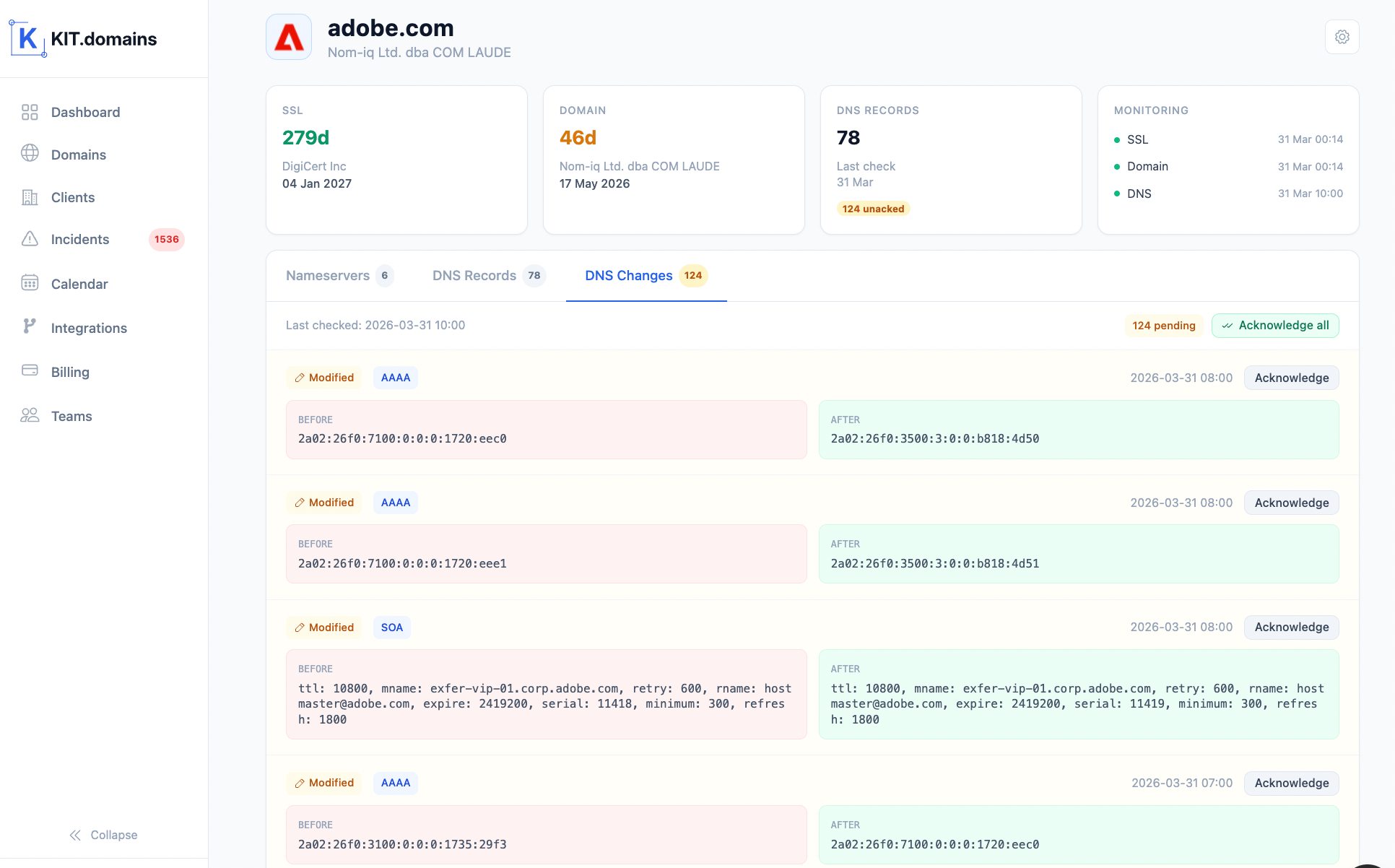
When a DNS record changes, KIT.domains captures that change in real time. This allows teams to monitor DNS changes across all domains without manual checks.
You don’t just receive a notification - you see exactly what was modified, including the previous and current values.
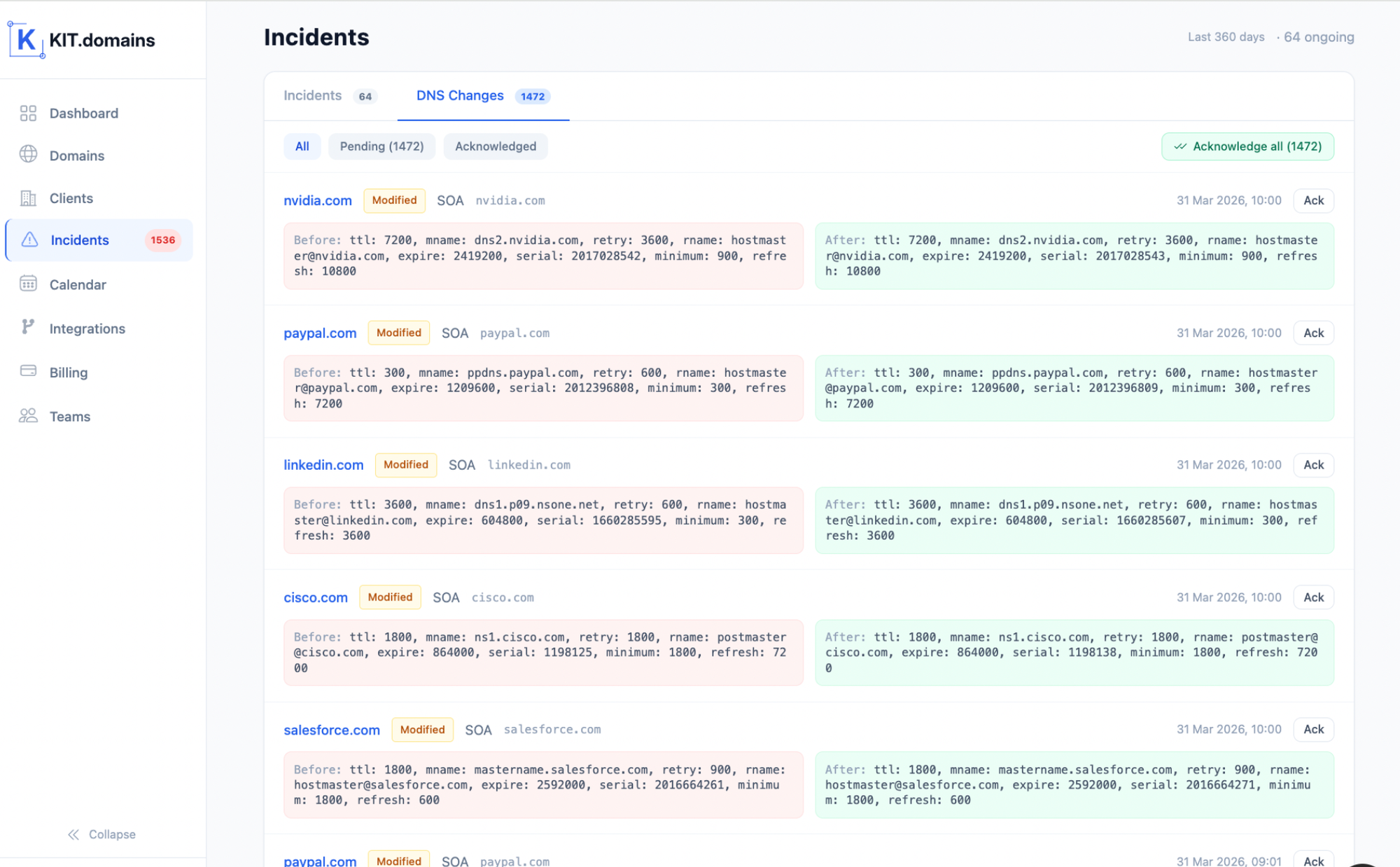
This eliminates guesswork. Teams no longer have to ask, “Did something change?” They can see it instantly.
Every change is tracked as part of a timeline, giving full visibility into how the domain’s configuration evolves over time. This makes it significantly easier to identify the root cause of issues and understand their impact.
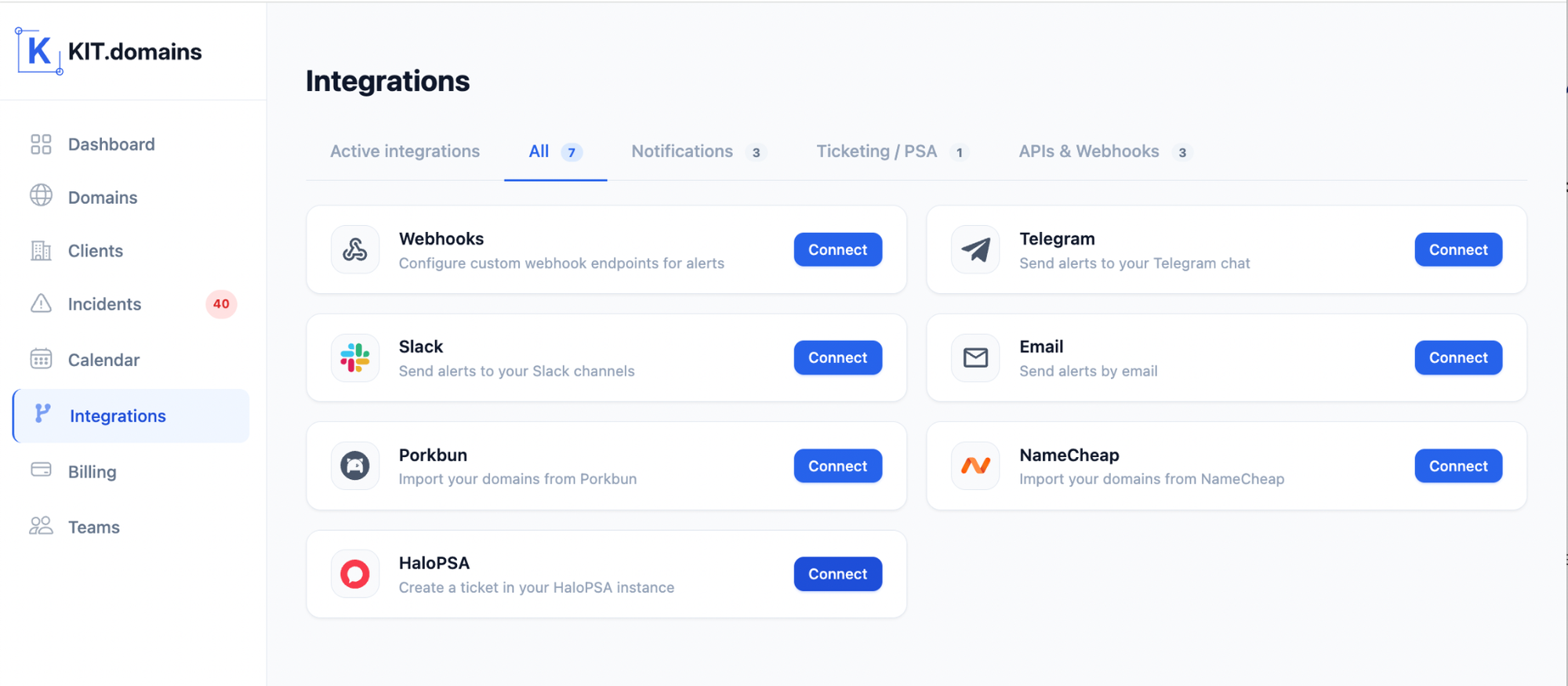
Alerts are delivered immediately through channels like Slack, Telegram, and webhooks, ensuring that the right people are notified without delay. Instead of relying on email, which often gets overlooked, teams receive actionable signals where they already work.
At the same time, all domains are managed through a centralized dashboard. This removes the need to switch between registrars or tools and ensures that nothing is missed.
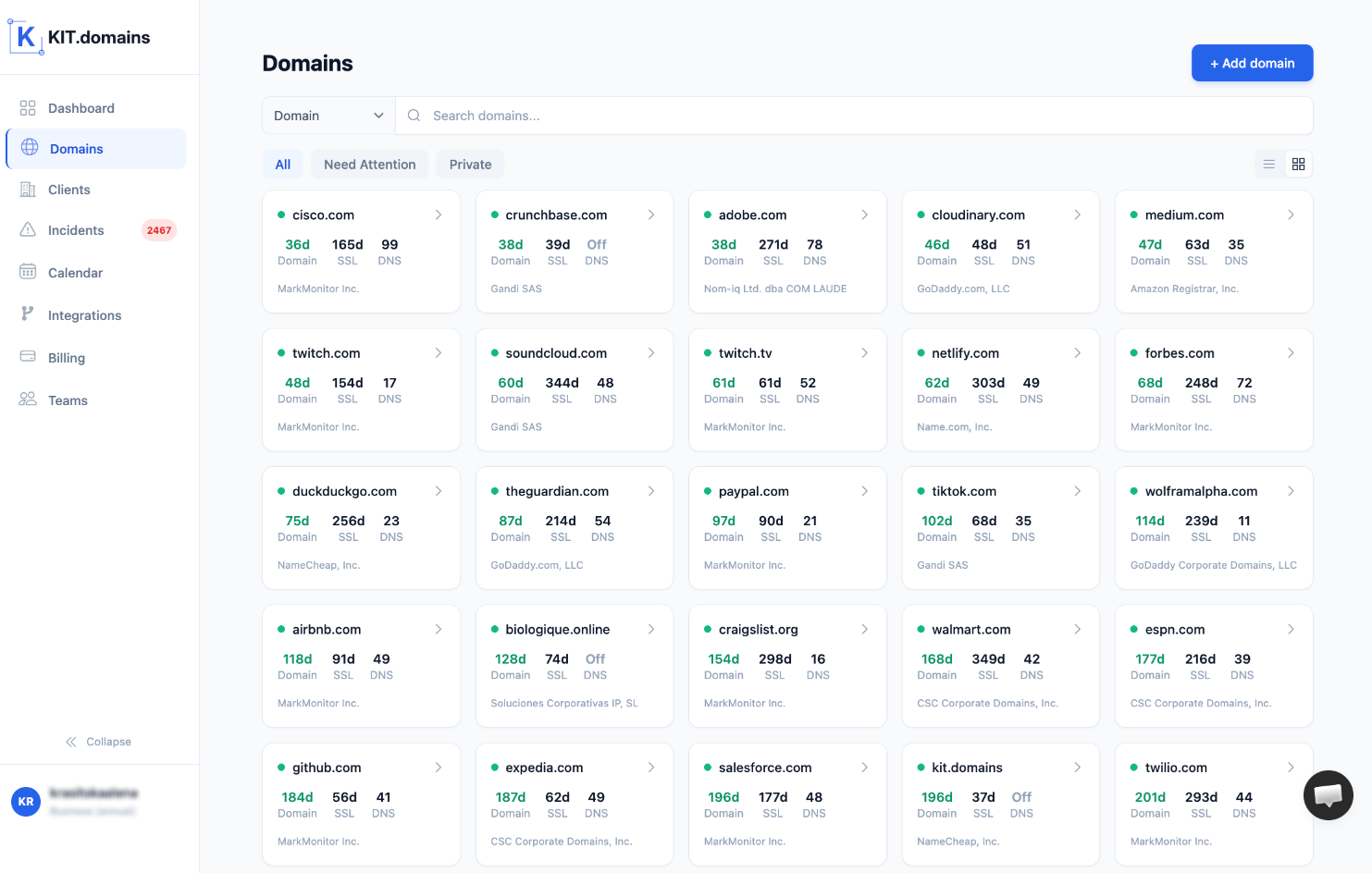
The result is a system where DNS issues are detected at the moment they begin - not after they’ve already caused problems.
Why This Approach Changes Client Relationships
DNS monitoring is often seen as a technical responsibility. But its impact is much broader.
From a client’s perspective, infrastructure is invisible. They don’t think about DNS records or configurations. They only notice when something stops working.
If email fails, if traffic drops, or if a service behaves unexpectedly, the assumption is simple: something went wrong on your side.
And in many cases, that’s true - even if the issue originated from a third-party change or an external provider. This is why prevention matters.
When you detect and resolve issues before clients notice them, the dynamic shifts completely. Instead of reacting to complaints, you’re proactively maintaining stability.
Instead of explaining failures, you’re preventing them.
Over time, this builds trust. Clients don’t just see you as someone who fixes problems. They see you as someone who ensures those problems don’t happen.
From Monitoring to Control
The difference between reactive and proactive DNS management isn’t just about speed. It’s about control.
Reactive setups leave teams in a constant cycle of response. Something breaks, an alert is triggered, and the team investigates.
Proactive systems change that dynamic. They provide visibility into changes, clarity around incidents, and the ability to act before impact occurs.
DNS becomes something you actively manage - not something you hope stays stable.
And in environments where reliability matters, that difference is critical.
Conclusion
DNS issues don’t announce themselves. They don’t trigger obvious alarms or immediate outages.
They begin quietly, with small changes that gradually lead to larger problems.
If your monitoring only tells you when something is already broken, you’re always one step behind.
Preventing DNS issues means watching what actually causes them - changes in your infrastructure.
With the right visibility, alerts, and centralized control, those changes become visible the moment they happen.
And once you can see them, you can stop them before they affect your clients.
Stop Waiting for Problems to Surface
The goal isn’t just to fix DNS issues faster. It’s to make sure your clients never notice them in the first place.
Start preventing DNS issues before they impact your clients - proactively, continuously, and with full visibility.
Try KIT.domains and take control of your domain infrastructure before issues arise.
FAQ: Preventing DNS Issues
What causes most DNS issues?
Most DNS issues are caused by changes - not failures. These include DNS record updates, misconfigurations, provider sync issues, or unauthorized modifications. The challenge is that these changes often go unnoticed until they impact users or services.
Why don’t uptime monitoring tools detect DNS problems?
Uptime monitoring tools only check if a website is reachable. DNS issues don’t always affect availability - they can break email delivery, traffic routing, or specific services while the website still appears online.
How can I detect DNS issues before they affect users?
The most effective approach is DNS change monitoring. By tracking changes in DNS records such as A, MX, and NS in real time, teams can detect issues the moment they occur - before they cause visible downtime or service disruption. Tools like KIT.domains help automate this process by continuously monitoring DNS records and alerting teams as soon as something changes.
How can I prevent DNS issues before they happen?
Preventing DNS issues requires continuous monitoring of changes, not just uptime. By tracking DNS record updates, setting real-time alerts, and maintaining visibility across all domains, teams can catch problems early and resolve them before users are affected. Platforms like KIT.domains provide this visibility by combining DNS monitoring, alerting, and centralized domain management in one place.
How quickly should DNS alerts be delivered?
DNS alerts should be delivered in real time. Even small delays can lead to missed emails, traffic loss, or misrouted requests. Alerts sent via Slack, Telegram, or webhooks help teams respond immediately.
What’s the difference between DNS monitoring and DNS integrity monitoring?
DNS monitoring checks whether records exist and resolve correctly.
DNS integrity monitoring goes further by tracking changes and detecting when records deviate from the expected configuration.