
DNS Integrity Monitoring: What It Is and Why It Matters
When a client’s website suddenly goes offline, emails stop being delivered, or traffic drops without any obvious reason, most teams start looking in the wrong place. They check the server, review recent deployments, or blame hosting providers.
But in many cases, the real issue sits deeper - in DNS.
DNS is one of the most critical layers of modern infrastructure, yet it’s often treated as something static. Configure it once, and forget about it. In reality, DNS is constantly changing, and every change introduces potential risk. This is exactly where DNS Integrity Monitoring becomes essential.
DNS Is Not Static - It’s a Moving Part of Your Infrastructure
It’s easy to assume that DNS records remain stable over time. But if you manage multiple domains, clients, or environments, you already know that’s not true.
DNS changes happen more often than teams realize. A developer updates a record during a migration. A marketing team connects a new landing page tool. An email provider requires new MX or TXT records. A CDN or security layer gets added. Even routine maintenance can lead to changes in A records, CNAMEs, or name servers.
Each of these actions affects how traffic is routed, how services communicate, and ultimately how reliable your infrastructure is.
The problem isn’t that DNS changes - the problem is that most teams don’t see those changes happening in real time.
That lack of visibility is what DNS integrity monitoring solves.
What Is DNS Integrity Monitoring?
DNS Integrity Monitoring is the process of continuously tracking DNS records and detecting any changes - whether expected or unauthorized.
Instead of relying on manual checks or waiting for something to break, a monitoring system keeps an active record of your DNS configuration and compares it against live data. The moment something changes - whether it’s an A record pointing to a new IP, an MX record being altered, or NS records being replaced - your team gets notified.
This approach combines several important concepts:
- DNS change detection
- real-time DNS monitoring
- domain infrastructure visibility
- DNS security monitoring
Together, they provide a complete picture of what’s happening across your domain portfolio.
Why DNS Integrity Monitoring Matters More Than Ever
As infrastructure becomes more distributed and teams rely on multiple third-party services, DNS becomes a central point of dependency. A small misconfiguration can cascade into a major outage.
One of the biggest risks is that DNS issues are often silent at first. There’s no obvious alert unless you’re actively monitoring. By the time someone notices, the damage is already done - downtime, lost traffic, broken emails, or frustrated clients.
DNS integrity monitoring changes that dynamic. Instead of reacting to incidents, teams gain the ability to detect problems as they happen.
For MSPs and agencies, this shift is especially important. Managing dozens or hundreds of client domains across different registrars means complexity increases fast. Without centralized DNS monitoring, it becomes nearly impossible to maintain full visibility.
The Hidden Risks of Unmonitored DNS
To understand the real value of DNS monitoring, it helps to look at what actually goes wrong in real-world scenarios.
A common issue is simple human error. Someone updates a DNS record in the wrong environment or mistypes an IP address. The result is immediate downtime, but the root cause isn’t obvious until someone inspects DNS manually.
Another frequent problem involves email delivery. If MX records change unexpectedly - whether due to misconfiguration or expired services - emails may stop arriving entirely. This doesn’t just affect communication; it directly impacts business operations.
More serious cases involve security risks. DNS hijacking or unauthorized changes to name servers can redirect traffic to malicious destinations. Without DNS integrity monitoring, these changes can go unnoticed long enough to cause significant damage.
Even third-party services can introduce risk. If a SaaS tool connected via CNAME expires or changes configuration, parts of your system may silently break.
In all these cases, the core issue isn’t the change itself - it’s the lack of immediate visibility.
From Visibility Gaps to Full Control
At this point, the pattern becomes clear.
DNS issues are rarely caused by complex failures. More often, they happen because teams simply don’t see what’s changing in real time. A record gets updated, a service expires, or access is modified - and no one notices until something breaks.
The challenge isn’t just monitoring a single domain. For MSPs, agencies, and IT teams, the real complexity comes from managing entire domain portfolios across multiple registrars, clients, and environments.
This is where basic tools and manual workflows start to fall apart.
Spreadsheets don’t update themselves. Registrar dashboards are fragmented. Alerts, if they exist at all, are inconsistent and easy to miss.
To actually solve the problem, teams need more than just “DNS checks”. They need:
- centralized domain visibility;
- real-time DNS change detection;
- reliable alerting that integrates into their workflow;
- a single place to track domains, SSL, and DNS integrity together.
This is exactly the gap modern domain monitoring platforms are designed to fill.
A Practical Approach to DNS Integrity Monitoring
Instead of treating DNS monitoring as a standalone task, leading teams are moving toward unified domain monitoring systems.
For example, platforms like KIT.domains are built specifically for MSPs and teams managing multiple client domains. Rather than checking DNS in isolation, they provide a centralized view of your entire domain portfolio - across registrars like GoDaddy, Namecheap, and others.
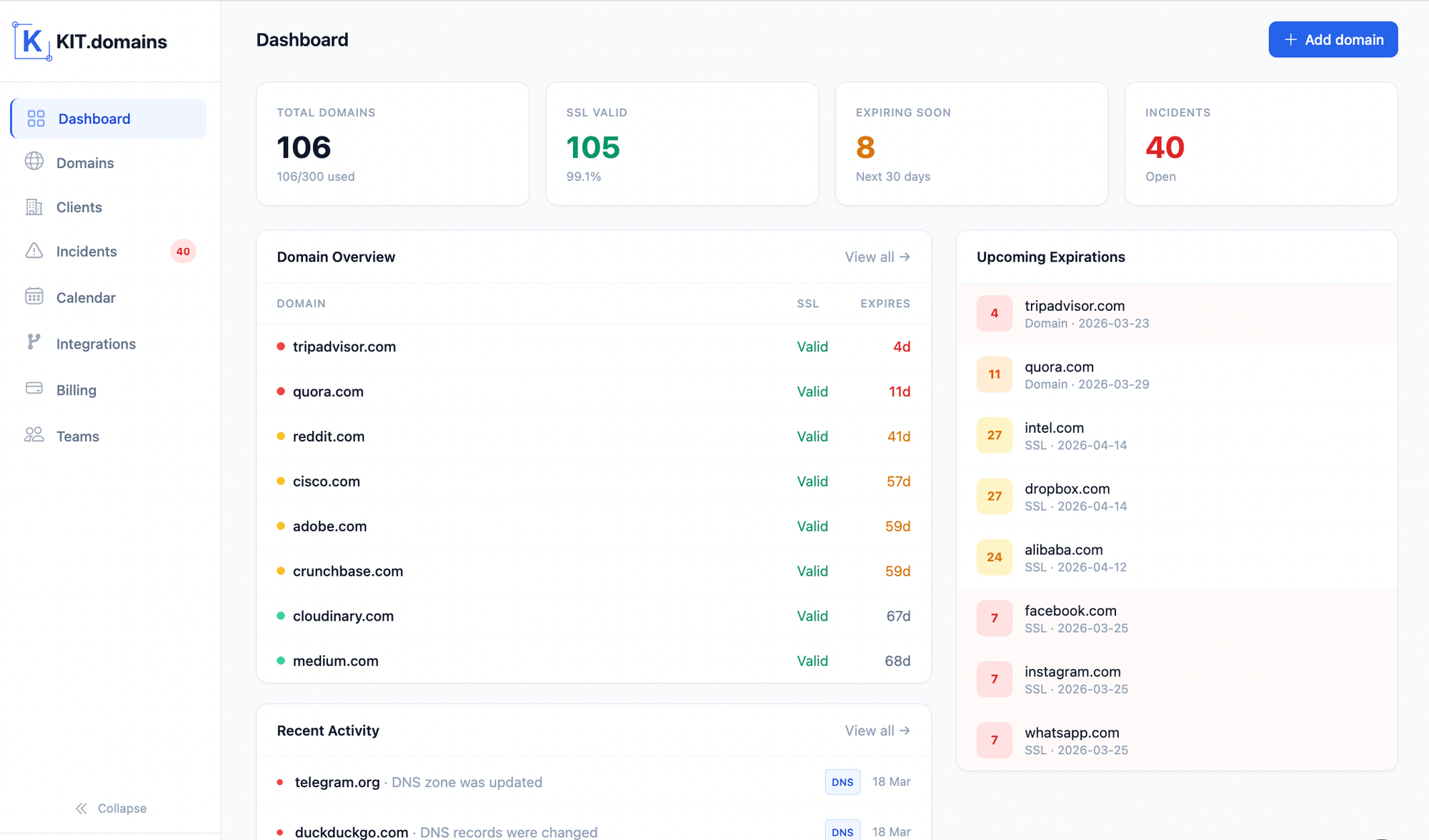
With this approach, DNS integrity monitoring becomes part of a broader system that includes:
- Domain expiration tracking:
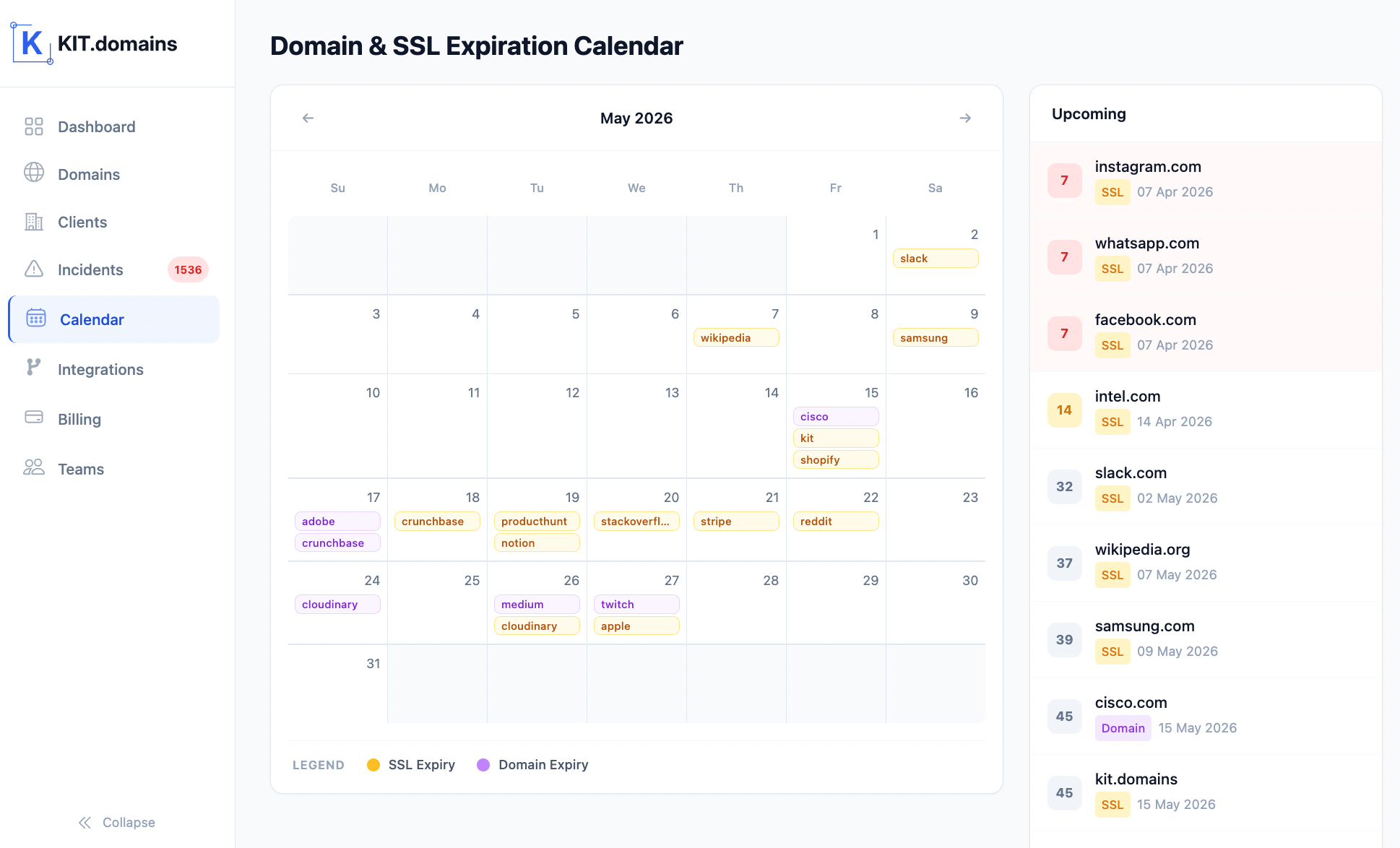
- SSL certificate monitoring:
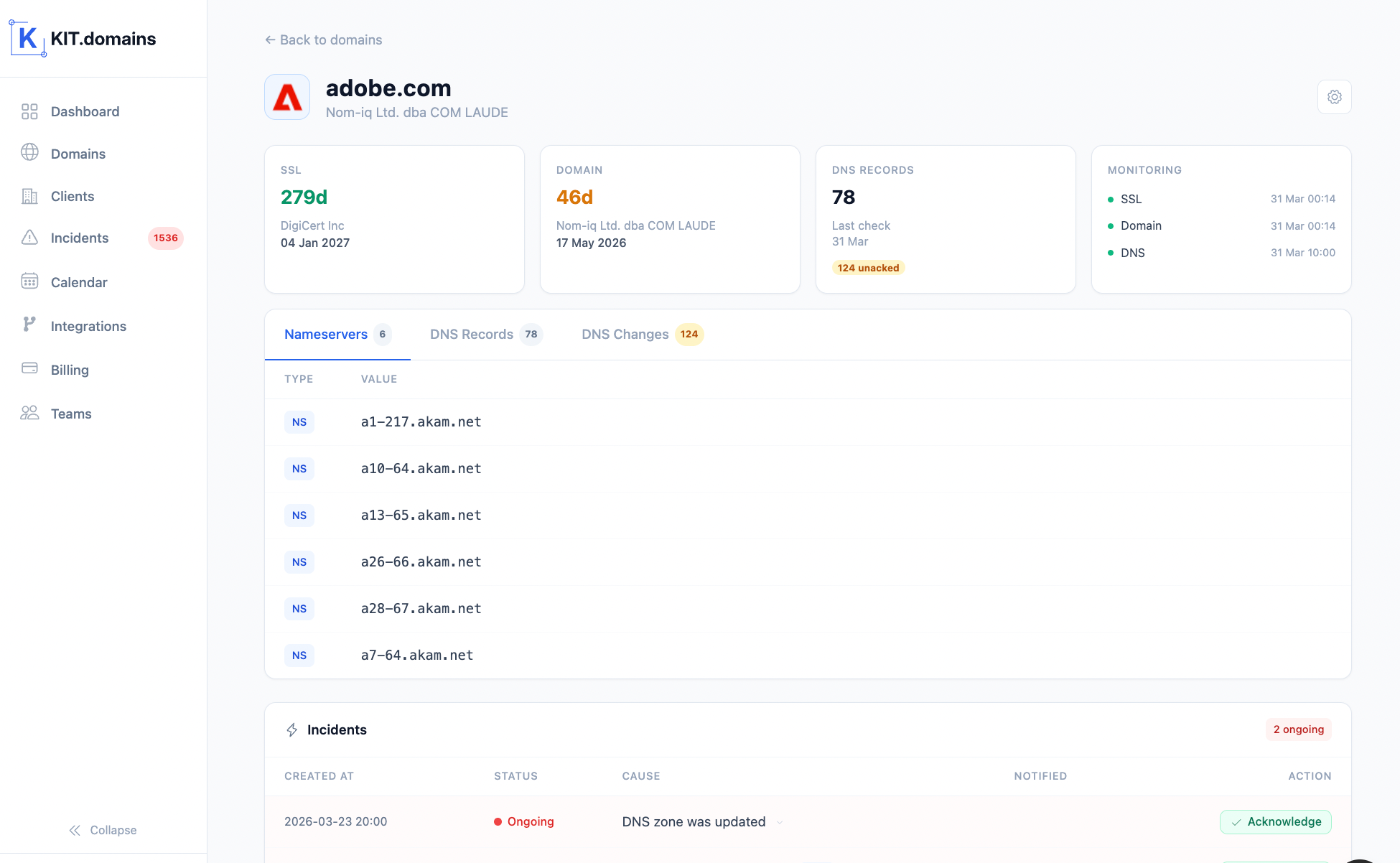
- Real-time DNS change detection:
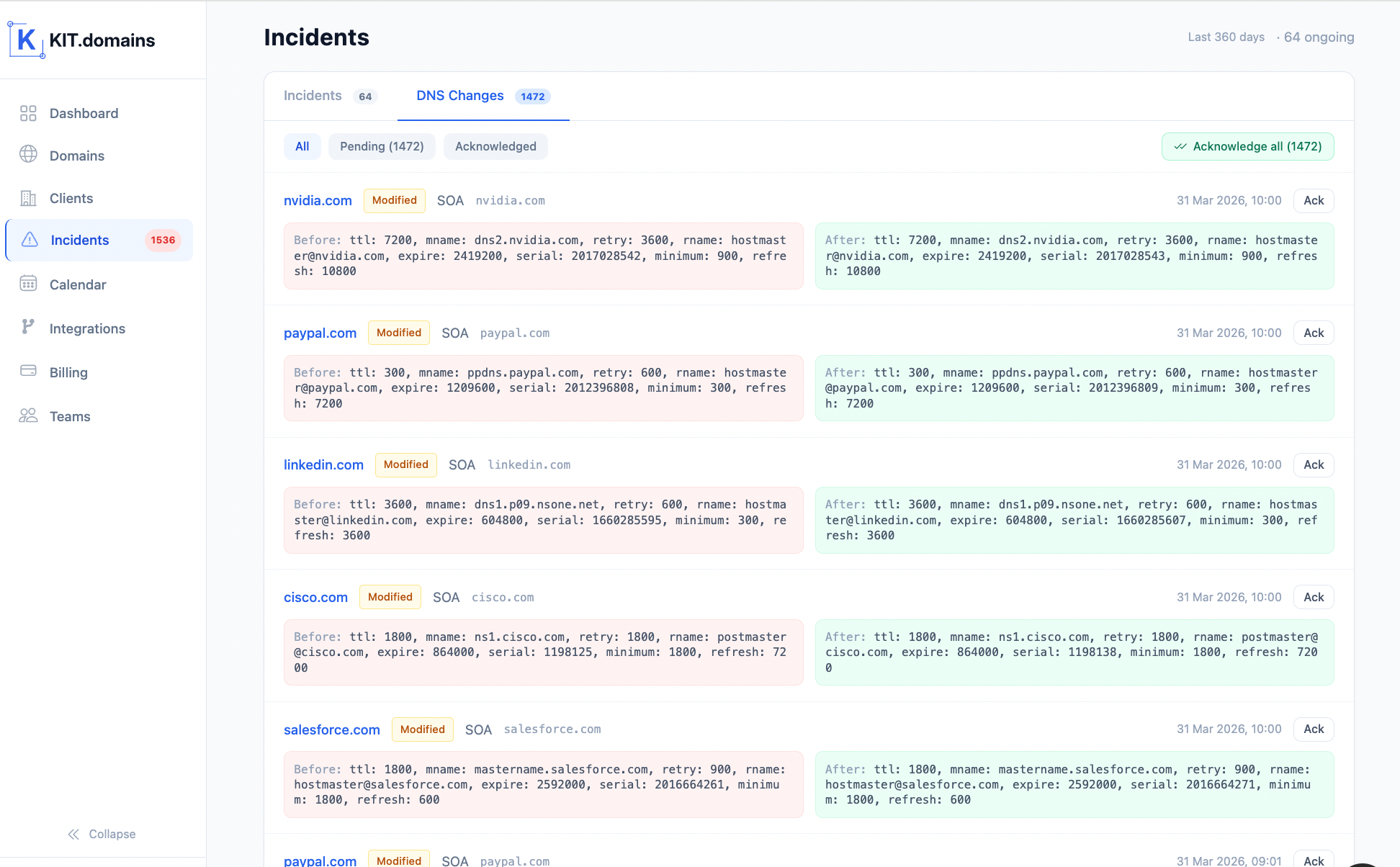
- Incident history and alerting:
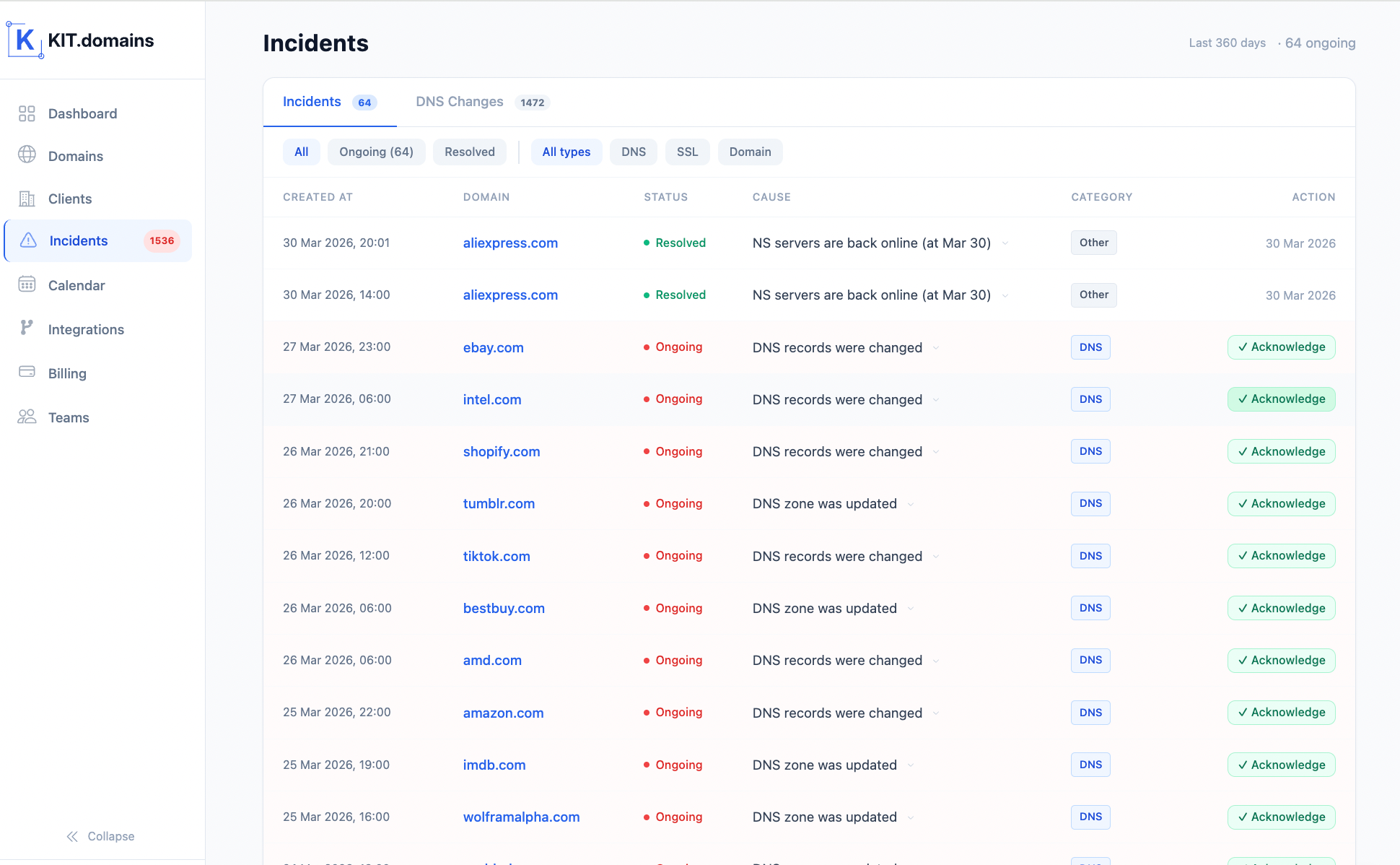
This means your team doesn’t just get notified when something breaks - you see changes as they happen, understand their impact, and can act before clients are affected.
More importantly, alerts don’t live in yet another dashboard. They go directly into tools your team already uses - whether that’s Slack, Telegram, or PSA systems like HaloPSA.
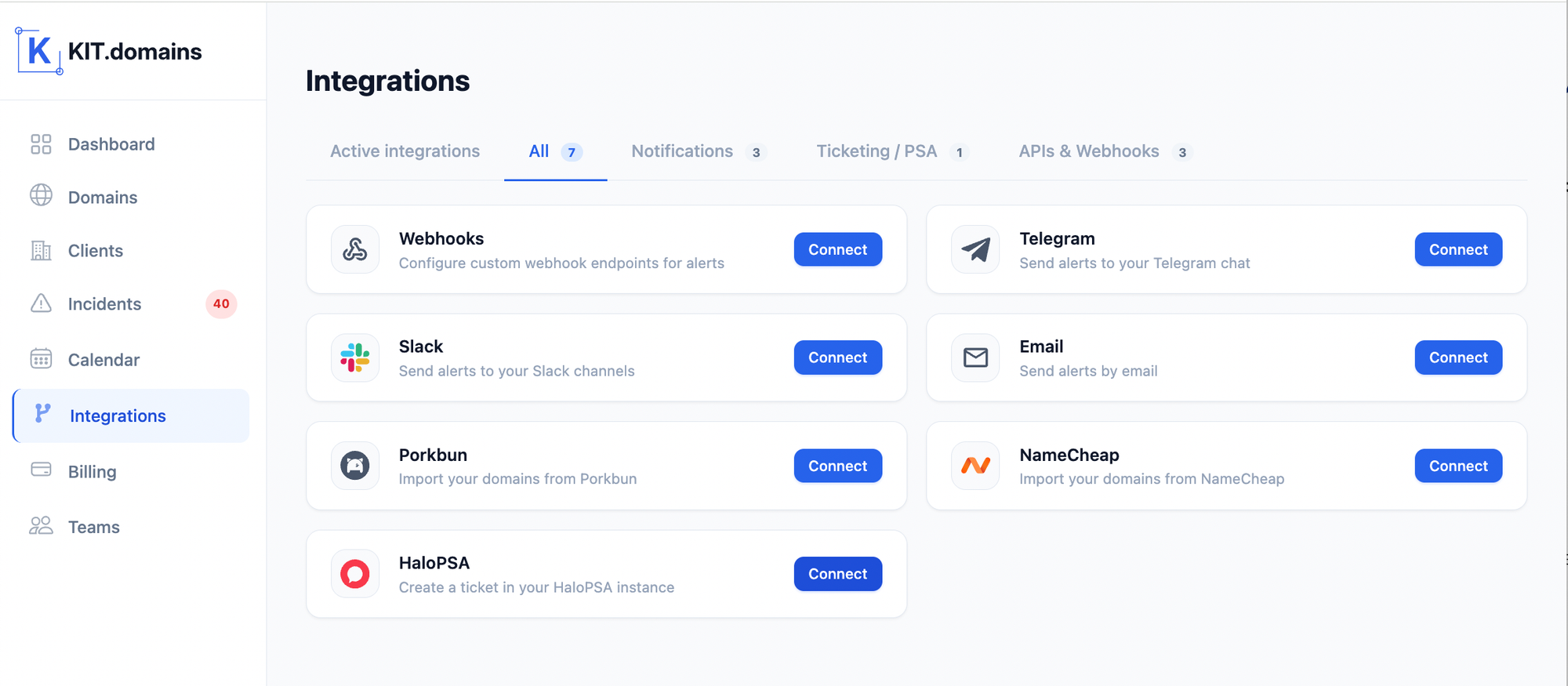
That shift - from scattered tools to a unified monitoring layer - is what turns DNS from a reactive problem into something you actually control.
Start monitoring your domains before issues impact your clients.
How DNS Integrity Monitoring Works in Practice
At its core, DNS integrity monitoring is about comparison and detection.
First, the system establishes a baseline - a snapshot of your current DNS records across all domains. This includes critical records like A, MX, NS, CNAME, and TXT.
Then, it continuously checks those records at regular intervals. Depending on the system, this can be near real-time or scheduled monitoring.
When a difference is detected between the current state and the baseline, the system flags it as a change. From there, alerts are triggered and sent to your team through channels like Slack, email, or webhooks.
What makes this powerful is not just the alert itself, but the context. You can see exactly what changed, when it changed, and which domain was affected.
Over time, this builds a complete history of DNS changes - something that becomes invaluable for troubleshooting and audits.
DNS Monitoring vs Manual Tracking
Some teams still rely on spreadsheets or occasional manual checks to manage DNS. This might work for a handful of domains, but it quickly breaks down at scale.
Manual tracking lacks real-time visibility. It depends on human attention, which means issues are often discovered too late. There’s also no reliable change history unless someone documents everything perfectly - which rarely happens.
Automated DNS monitoring, on the other hand, removes these limitations. It continuously tracks changes, reduces human error, and provides a centralized view of all domains.
For MSPs, IT teams, and agencies, this isn’t just a convenience - it’s a necessity for scaling operations.
DNS Integrity Monitoring as Part of a Bigger Picture
Once DNS integrity monitoring is properly implemented within a centralized system, it becomes clear that it doesn’t exist in isolation. It works best as part of a broader domain monitoring strategy.
DNS integrity monitoring complements:
- domain expiration tracking;
- SSL certificate monitoring;
- uptime monitoring.
Together, these systems create a full safety net around your domain infrastructure.
For example, even if your DNS is configured correctly, an expired SSL certificate can still break user trust. Or if a domain expires, DNS monitoring alone won’t save you.
That’s why modern teams are moving toward unified domain monitoring platforms that combine all these signals in one place.
Why This Matters for MSPs and Growing Teams
For MSPs, the stakes are even higher. You’re not just managing one infrastructure - you’re responsible for multiple clients, each with their own domains, services, and expectations.
Without proper monitoring, your team becomes reactive. Issues are discovered through client complaints, not internal alerts. This leads to stress, blame, and unnecessary churn.
DNS integrity monitoring flips that model. It gives you proactive visibility across all client domains, allowing your team to act before issues escalate.
It also improves communication. Instead of guessing what happened, you have clear data. You can explain incidents, resolve them faster, and build trust with clients.
The Future of DNS Monitoring
As infrastructure continues to evolve, DNS will only become more critical. More services rely on it, more integrations depend on it, and more risks are introduced through complexity.
The future belongs to teams that prioritize visibility and automation. Real-time monitoring, centralized dashboards, and integrated alerting are no longer “nice to have” - they are essential.
DNS integrity monitoring is a key part of that shift. It turns DNS from a blind spot into a controlled, observable layer of your infrastructure.
FAQ: DNS Integrity Monitoring
What is DNS integrity monitoring in simple terms?
DNS integrity monitoring is the process of continuously checking your DNS records and alerting you whenever something changes. It helps you detect issues before they cause downtime or service disruption.
Why is DNS monitoring important for businesses?
DNS controls how users reach your website and services. If something goes wrong, it can lead to downtime, lost traffic, and broken email delivery. Monitoring ensures you catch problems early.
What DNS records should be monitored?
The most critical records include A, MX, NS, CNAME, and TXT records. These affect website availability, email routing, and overall domain functionality.
Can DNS changes happen without my knowledge?
Yes. Changes can occur due to human error, expired services, registrar issues, or even unauthorized access. Without monitoring, you may not notice until something breaks.
How often should DNS be monitored?
Ideally, DNS should be monitored continuously or at frequent intervals. Real-time or near real-time monitoring provides the best protection.
Is DNS monitoring only for large companies?
No. Even small teams and startups benefit from DNS monitoring. In fact, smaller teams often have fewer resources to react quickly, making proactive monitoring even more valuable.
How is DNS integrity monitoring different from uptime monitoring?
Uptime monitoring checks if your website is accessible. DNS monitoring checks whether your domain configuration is correct. Both are important, but they solve different problems.
Take Control of Your DNS Before It Breaks
DNS issues don’t have to be unpredictable.
With the right monitoring in place, your team can detect changes instantly, prevent downtime, and stay ahead of client expectations.
Start your free trial with KIT.domains.