
Check SSL Certificate: Why It Matters and How to Avoid Expiration Issues
Most website owners don’t think about SSL certificates - until something breaks.
A user opens your website and sees a warning: “Your connection is not private.”
Traffic drops instantly. Ads keep spending. Trust disappears in seconds.
All of this can be caused by one simple issue: an expired or misconfigured SSL certificate.
In this guide, we’ll explain how SSL works, why checking SSL certificates is critical, and how to avoid unexpected failures.
Check Your SSL Certificate Instantly
Want to quickly check your SSL certificate?
Use our free SSL checker to verify expiration date, validity, and configuration in seconds:
What Is an SSL Certificate and How Does It Work?
An SSL certificate is a digital file that verifies your website’s identity and encrypts data exchanged between the user and the server.
When someone visits your site:
- The browser requests identity verification
- The server sends its SSL certificate
- The browser validates the certificate
- A secure encrypted connection is established
This process happens instantly. Users only see a padlock icon - but behind it is what keeps data safe.

What Does “Check SSL Certificate” Actually Mean?
Checking an SSL certificate isn’t just about seeing if it exists.
A proper SSL check includes:
- Expiration date - when the certificate becomes invalid
- Certificate validity - whether it’s trusted by browsers
- Issuer - who provided the certificate
- Domain match - whether it matches your domain
- Certificate chain - whether intermediate certificates are correct
If any of these fail, your website can show security warnings or stop working correctly.
What Happens When an SSL Certificate Expires?
SSL certificates don’t last forever. When they expire, the impact is immediate.
1. Browser Security Warnings

2. Lost Traffic and Conversions
Paid traffic becomes useless if users can’t access your site safely.
3. SEO Impact
Search engines prioritize secure websites. An expired SSL can hurt rankings.
4. Data Security Risks
Without encryption, sensitive data can be intercepted.
Common SSL Certificate Problems (Not Just Expiration)
Expiration is only one issue. Many SSL problems happen silently.
Here are the most common ones:
- Expired certificate - the most obvious failure
- Domain mismatch - certificate doesn’t match the domain
- Incomplete certificate chain - missing intermediate certificates
- Revoked certificate - certificate marked as unsafe
- Incorrect installation - misconfigured SSL on the server
These issues often go unnoticed until users report them.
How to Check SSL Certificate Expiration
There are several ways to check your SSL certificate.
1. Browser Check (Manual)
- Click the lock icon in the address bar.

- Open certificate details


- Check the expiration date.


This works for quick checks but doesn’t scale.
If you're managing multiple domains, manual SSL checks quickly become unreliable. We covered this in detail in our guide on how to monitor SSL certificates across large domain portfolios.
2. Online SSL Checker Tools
If you want a faster way, you can use an online SSL checker.
For example, our free tool allows you to:
- check SSL expiration date
- verify certificate validity
- detect configuration issues
>> Try the Free SSL checker.

3. Automated Monitoring Tools (Recommended)
If you manage multiple domains, manual checks quickly become unreliable.
Automated monitoring tools continuously track:
- SSL expiration
- certificate health
- configuration issues
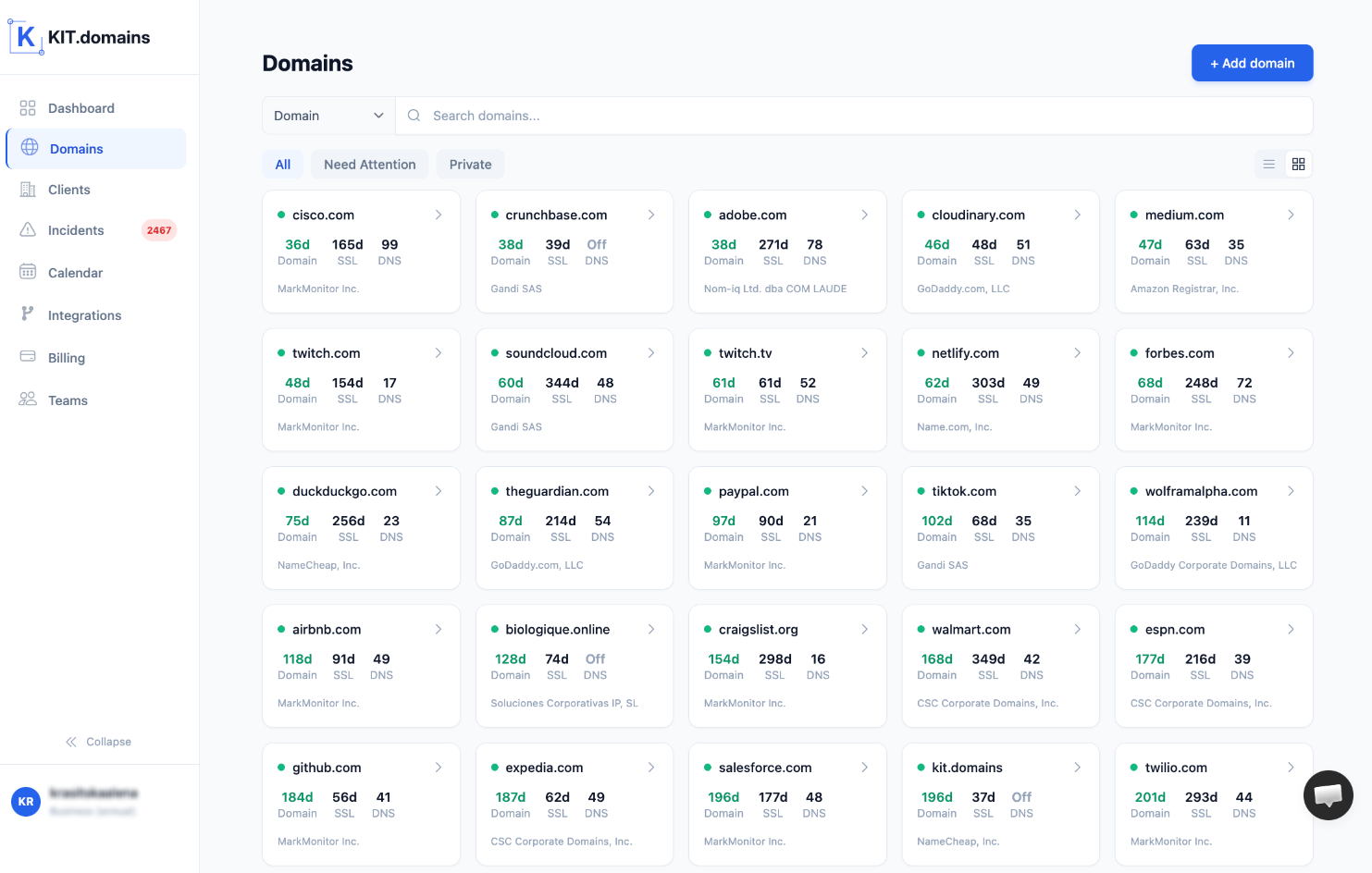
Tools like KIT.domains remove the need for manual tracking by monitoring all your certificates in one place and alerting you before problems occur.
Why Manual SSL Checks Don’t Work at Scale
Checking SSL certificates manually might work for one website - but not for dozens.
Here’s why teams run into problems:
- certificates are forgotten
- no centralized visibility
- no alerts before expiration
- issues are discovered too late
This leads to a reactive workflow - fixing problems after users are already affected.
How Automated SSL Monitoring Solves This
Instead of checking certificates manually, modern teams use automated monitoring.
With a platform like KIT.domains, you get:
- Continuous SSL monitoring - no manual checks
- Expiration alerts in advance - avoid last-minute renewals
- Centralized dashboard - all domains in one place
- Combined monitoring - SSL, domains, and DNS together
This shifts SSL management from reactive to proactive.
How Often Should You Check SSL Certificates?
Ideally, SSL certificates should be monitored continuously.
If you rely on manual checks, you should review them at least:
- once a month (minimum)
- weekly (recommended for critical systems)
However, automated monitoring is the only reliable way to ensure nothing is missed.
Conclusion
SSL certificates are a critical part of your website’s infrastructure - but they’re often overlooked until something goes wrong.
Checking SSL certificates regularly helps prevent downtime, protect user data, and maintain trust.
Whether you use manual checks, online tools, or automated monitoring, the key is consistency.
If you manage multiple domains, switching to an automated solution like KIT.domains can save time and eliminate the risk of missed expirations.
Check Your SSL Certificate Now
If you’re not sure about your SSL status, it only takes a few seconds to verify.
Check your SSL certificate here: Free SSL Checker.
FAQ: SSL Certificate Checks
How do I check SSL certificate expiration?
You can check it in your browser, use an online SSL checker, or monitor it automatically with a domain monitoring tool.
What happens if an SSL certificate expires?
Your website will show security warnings, users may leave immediately, and search rankings can drop.
How early should I renew an SSL certificate?
It’s recommended to renew SSL certificates at least 30 days before expiration.
Can SSL certificates fail without expiring?
Yes. Issues like incorrect configuration, domain mismatch, or broken certificate chains can cause failures even if the certificate is still valid.
What is the best way to monitor SSL certificates?
The most reliable method is automated monitoring, which continuously checks certificates and alerts you before issues occur.